Inspection 342235660 OPENED APR 6, 2017Closed
1000 Gregg Street, Carnegie, PA 15106 · Clay Building Material and Refractories Manufacturing · OSHA's record · Phone and website on Google Maps
No citations from this inspection.
Carnegie, Pennsylvania · Clay Building Material and Refractories Manufacturing · NAICS 327120
Since 2015, OSHA inspectors have visited Advanced Refractory Technologies in Pennsylvania 2 times.
The most recent inspection opened on Apr 6, 2017 to follow up on an earlier case, in Carnegie.
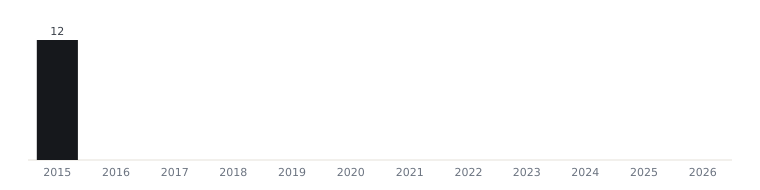
In all, OSHA issued 12 citation items: 12 serious.
The proposed penalties came to $5,600; today they stand at $3,800, 32% less.
The rule cited most here is 1910.95 (noise), 4 times.
Among manufacturing employers, the typical cited inspection since 2015 ends with a $4,500 penalty. Advanced Refractory Technologies averages $3,800 across 1 cited inspection.
Pennsylvania · latest 90 days of OSHA records
299employers cited
Get notified the morning OSHA posts each new citation in Pennsylvania: the employer, the site address, the rules broken and the penalty.
See who gets cited nextLatest cited in Pennsylvania
Checking a subcontractor, a client or your own company? Watch Advanced Refractory Technologies and get notified the morning OSHA posts a new citation for it.
Watch this company1000 Gregg Street, Carnegie, PA 15106 · Clay Building Material and Refractories Manufacturing · OSHA's record · Phone and website on Google Maps
No citations from this inspection.
1000 Gregg Street, Carnegie, PA 15106 · Clay Building Material and Refractories Manufacturing · OSHA's record · Phone and website on Google Maps
| Citation and rule | Type | Proposed | Current | Issued | Status |
|---|---|---|---|---|---|
| Citation 1, item 1a 29 CFR 1910.1000(c) · Air contaminants |
Serious | $1,600 | $1,090 | Jul 17, 2015 | Final |
| Citation 1, item 1b 29 CFR 1910.1000(e) · Air contaminants |
Serious | $0 | $0 | Jul 17, 2015 | Final |
| Citation 1, item 2a 29 CFR 1910.134(c)(1) · Respiratory protection |
Serious | $1,200 | $810 | Jul 17, 2015 | Final |
| Citation 1, item 2b 29 CFR 1910.134(e)(1) · Respiratory protection |
Serious | $0 | $0 | Jul 17, 2015 | Final |
| Citation 1, item 2c 29 CFR 1910.134(f)(1) · Respiratory protection |
Serious | $0 | $0 | Jul 17, 2015 | Final |
| Citation 1, item 2d 29 CFR 1910.134(k)(3) · Respiratory protection |
Serious | $0 | $0 | Jul 17, 2015 | Final |
| Citation 1, item 3a 29 CFR 1910.95(c)(1) · Noise |
Serious | $1,600 | $1,090 | Jul 17, 2015 | Final |
| Citation 1, item 3b 29 CFR 1910.95(g)(1) · Noise |
Serious | $0 | $0 | Jul 17, 2015 | Final |
| Citation 1, item 3c 29 CFR 1910.95(k)(1) · Noise |
Serious | $0 | $0 | Jul 17, 2015 | Final |
| Citation 1, item 3d 29 CFR 1910.95(l)(1) · Noise |
Serious | $0 | $0 | Jul 17, 2015 | Final |
| Citation 1, item 4a 29 CFR 1910.1200(e)(1) · Hazard communication |
Serious | $1,200 | $810 | Jul 17, 2015 | Final |
| Citation 1, item 4b 29 CFR 1910.1200(h)(1) · Hazard communication |
Serious | $0 | $0 | Jul 17, 2015 | Final |
Current text from the Code of Federal Regulations. Some citations were issued under older wording.
29 CFR 1910.1000(c)
(c) Table Z-3. An employee's exposure to any substance listed in Table Z-3, in any 8-hour work shift of a 40-hour work week, shall not exceed the 8-hour time weighted average limit given for that substance in the table.
29 CFR 1910.1000(e)
(e) To achieve compliance with paragraphs (a) through (d) of this section, administrative or engineering controls must first be determined and implemented whenever feasible. When such controls are not feasible to achieve full compliance, protective equipment or any other protective measures shall be used to keep the exposure of employees to air contaminants within the limits prescribed in this section. Any equipment and/or technical measures used for this purpose must be approved for each particular use by a competent industrial hygienist or other technically qualified person. Whenever respirators are used, their use shall comply with 1910.134.
29 CFR 1910.1200(e)(1)
(e) Written hazard communication program. (1) Employers shall develop, implement, and maintain at each workplace, a written hazard communication program which at least describes how the criteria specified in paragraphs (f), (g), and (h) of this section for labels and other forms of warning, safety data sheets, and employee information and training will be met, and which also includes the following:
Alert subscribers get notified of each newly cited employer in Pennsylvania the morning it is posted. See the alert plans.
Source: U.S. Department of Labor, OSHA enforcement data. A citation is OSHA's allegation; employers can contest it, and the status column shows where each item stands. Something wrong on this page? Tell us.