Inspection 345482616 OPENED AUG 18, 2021Closed
32777 Lyndon B Johnson Freeway, Dallas, TX 75211 · Mattress Manufacturing · OSHA's record · Phone and website on Google Maps
No citations from this inspection.
OSHA has inspected American Textile Company, Incorporated 2 times in Texas since 2020.
The latest one began on Aug 18, 2021 to follow up on an earlier case, in Dallas.
Those inspections ended with 1 citation item: 1 serious.
Penalties were first proposed at $13,494 and now stand at $8,096, 40% lower after settlements or reviews.
How that compares: the median penalty per cited inspection for manufacturing employers since 2015 is $3,600, and American Textile Company, Incorporated averages $8,096 (1 cited inspection).
It reported 2 severe injuries to OSHA since 2015.
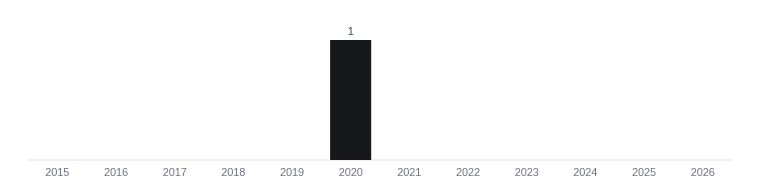
Texas · latest 90 days of OSHA records
394employers cited
Get notified the morning OSHA posts each new citation in Texas: the employer, the site address, the rules broken and the penalty.
See who gets cited nextLatest cited in Texas
Checking a subcontractor, a client or your own company? Watch American Textile Company, Incorporated and get notified the morning OSHA posts a new citation for it.
Watch this company32777 Lyndon B Johnson Freeway, Dallas, TX 75211 · Mattress Manufacturing · OSHA's record · Phone and website on Google Maps
No citations from this inspection.
32777 Lyndond B Johnson Freeway, Dallas, TX 75241 · Mattress Manufacturing · OSHA's record · Phone and website on Google Maps
Incident on Sep 23, 2020: Five of employee's fingers are amputated in running machine
At 3:30 p.m. on September 23, 2020, an employee was working for a company that manufactured mattresses. He maintained machinery. Among the firm's equipment was blow fill machine part 5, a Qingdao ClusterLoft Co., Ltd. model number T01EB-100 fiber opening blow fill machine, with serial number 18QL10009B. The machine ran on 480-volt 60 Hz 3-phase power. Its main rollers turned at 500 to 600 rpm. The machine had been at the company for about a year. It got clogged once or twice per shift, depending on the weather. The procedure for unclogging the machine was first to turn the power off at the circuit breaker box on the side of the machine and then to lock out the circuit breaker. The machine had a hinged plexiglass access door. Opening the door initiated the machine's stop process. The machine took about one minute to come to a complete stop. The machine was clogged now. The employee was unclogging it. He had last cleaned the machine five or six days earlier. The employee began by locating the clog. He had not locked out or tagged out the machine. The machine was supposed to feed material into a silo, but the silo was empty. Seeing that the feed rollers that grabbed fiber and tore it were not clogged, the employee checked elsewhere. He could not see or hear the machine running. Parts inside, though, were coasting to a stop. Even with the machine at a complete stop, a big feed roller on the inside was still spinning. The employee removed a safety guard and reached into some ductwork with his left hand. Not feeling anything, he reached in farther. He heard something fall on the floor. His left hand had been struck by a "carded" fiber processing roll. He snatched his hand out from the hole and saw that all five fingers had been amputated. The employee was hospitalized. The maintenance supervisor, working nearby but out of sight, knew that the machine was not locked out or tagged out. The employee had learned how to clean the machine by watching the maintenance supervisor.
| Citation and rule | Type | Proposed | Current | Issued | Status |
|---|---|---|---|---|---|
| Citation 1, item 1 29 CFR 1910.212(a)(1) · Machine guarding |
Serious | $13,494 | $8,096 | Jan 15, 2021 | Final |
Employers must report any work-related amputation, in-patient hospitalization or loss of an eye to OSHA within 24 hours. 2 reports on file.
Dec 14, 2021, Dallas: Hospitalization · traumatic injuries and disorders, unspecified · nonclassifiable
A pillow stuffing machine had been cleaned and unjammed in a maintenance shop. A technician re-energized the machine to ensure proper functionality, then reached inside it to remove something. His arm was pulled under a tensioning roller.
Sep 23, 2020, Dallas: Amputation · amputations · finger(s), fingernail(s), unspecified
An employee was clearing a clog in fiber processing equipment when his hand came in contact with a moving part, injuring his fingers and resulting in an amputation.
Current text from the Code of Federal Regulations. Some citations were issued under older wording.
29 CFR 1910.212(a)(1)
(a) Machine guarding—(1) Types of guarding. One or more methods of machine guarding shall be provided to protect the operator and other employees in the machine area from hazards such as those created by point of operation, ingoing nip points, rotating parts, flying chips and sparks. Examples of guarding methods are—barrier guards, two-hand tripping devices, electronic safety devices, etc.
Alert subscribers get notified of each newly cited employer in Texas the morning it is posted. See the alert plans.
Source: U.S. Department of Labor, OSHA enforcement data. A citation is OSHA's allegation; employers can contest it, and the status column shows where each item stands. Something wrong on this page? Tell us.