OSHA SearchOSHA records by employer

Artcris Roofing LLC: OSHA inspections and violations

Dayton, Ohio · Roofing Contractors · NAICS 238160

1inspections
3citation items
$4,965current penalties
Apr 29, 2025last inspection

OSHA inspectors have visited Artcris Roofing LLC in Ohio one time.

It opened on Apr 29, 2025 as a planned inspection, in Dayton.

In all, OSHA issued 3 citation items: 3 serious.

The proposed penalties came to $14,895; today they stand at $4,965, 67% less.

Among construction employers, the typical cited inspection since 2015 ends with a $3,080 penalty. Artcris Roofing LLC averages $4,965 across 1 cited inspection.

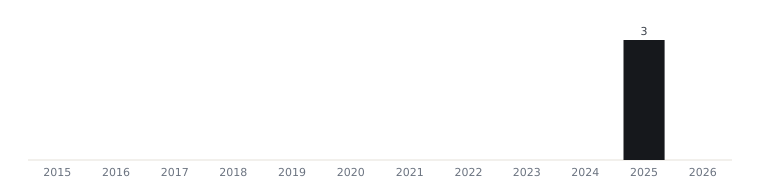
Artcris Roofing LLC: OSHA citation items per year, 2025 to 2025
Citation items per year, by inspection date.

Ohio · latest 90 days of OSHA records

260employers cited

67 of them in the same industry

Get notified the morning OSHA posts each new citation in Ohio: the employer, the site address, the rules broken and the penalty.

See who gets cited next

Latest cited in Ohio

Checking a subcontractor, a client or your own company? Watch Artcris Roofing LLC and get notified the morning OSHA posts a new citation for it.

Watch this company

Inspection history

Inspection 348211814 OPENED APR 29, 2025Closed

Planned · Partial · Safety · 5 employees at the site · Closed Oct 5, 2026

6696 Springboro Pike, Dayton, OH 45449 · Roofing Contractors · OSHA's record · Phone and website on Google Maps

Citation and ruleTypeProposedCurrentIssuedStatus
Citation 1, item 1a
29 CFR 1926.501(b)(10) · Fall protection in construction
Serious$4,965$2,482May 15, 2025Final
Citation 1, item 1b
29 CFR 1926.503(a)(1) · Fall protection training in construction
Serious$4,965$0May 15, 2025Final
Citation 1, item 3
29 CFR 1926.1053(b)(1) · Ladders in construction
Serious$4,965$2,482May 15, 2025Final

The rules behind these citations

Current text from the Code of Federal Regulations. Some citations were issued under older wording.

29 CFR 1926.1053 · Ladders in construction

29 CFR 1926.1053(b)(1)

(1) When portable ladders are used for access to an upper landing surface, the ladder side rails shall extend at least 3 feet (.9 m) above the upper landing surface to which the ladder is used to gain access; or, when such an extension is not possible because of the ladder's length, then the ladder shall be secured at its top to a rigid support that will not deflect, and a grasping device, such as a grabrail, shall be provided to assist employees in mounting and dismounting the ladder. In no case shall the extension be such that ladder deflection under a load would, by itself, cause the ladder to slip off its support.

29 CFR 1926.501 · Fall protection in construction

29 CFR 1926.501(b)(10)

(10) Roofing work on Low-slope roofs. Except as otherwise provided in paragraph (b) of this section, each employee engaged in roofing activities on low-slope roofs, with unprotected sides and edges 6 feet (1.8 m) or more above lower levels shall be protected from falling by guardrail systems, safety net systems, personal fall arrest systems, or a combination of warning line system and guardrail system, warning line system and safety net system, or warning line system and personal fall arrest system, or warning line system and safety monitoring system. Or, on roofs 50-feet (15.25 m) or less in width (see appendix A to subpart M of this part), the use of a safety monitoring system alone [i.e. without the warning line system] is permitted.

29 CFR 1926.503 · Fall protection training in construction

29 CFR 1926.503(a)(1)

(a) Training program. (1) The employer shall provide a training program for each employee who might be exposed to fall hazards. The program shall enable each employee to recognize the hazards of falling and shall train each employee in the procedures to be followed in order to minimize these hazards.

Other roofing contractors employers in Ohio

Alert subscribers get notified of each newly cited employer in Ohio the morning it is posted. See the alert plans.

Source: U.S. Department of Labor, OSHA enforcement data. A citation is OSHA's allegation; employers can contest it, and the status column shows where each item stands. Something wrong on this page? Tell us.