OSHA SearchOSHA records by employer

B&G Property Maintenance Inc: OSHA inspections and violations

Pinecrest, Florida · Landscaping Services · NAICS 561730

1inspections
3citation items
$9,054current penalties
Dec 15, 2017last inspection

OSHA has inspected B&G Property Maintenance Inc once in Florida.

The inspection began on Dec 15, 2017 after a fatality or catastrophe, in Pinecrest.

That inspection ended with 3 citation items: 1 serious and 2 other-than-serious.

Penalties were first proposed at $12,934 and now stand at $9,054, 30% lower after settlements or reviews.

Hazard communication comes up most often in these citations: 2 items under 1910.1200.

How that compares: the median penalty per cited inspection for staffing, cleaning and waste services employers since 2015 is $2,217, and B&G Property Maintenance Inc averages $9,054 (1 cited inspection).

1 inspection on this page followed a fatal incident.

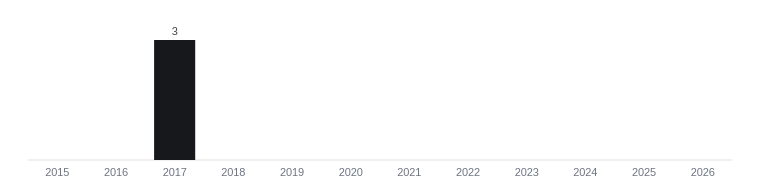
B&G Property Maintenance Inc: OSHA citation items per year, 2017 to 2017
Citation items per year, by inspection date.

Florida · latest 90 days of OSHA records

320employers cited

10 of them in the same industry

Get notified the morning OSHA posts each new citation in Florida: the employer, the site address, the rules broken and the penalty.

See who gets cited next

Latest cited in Florida

Checking a subcontractor, a client or your own company? Watch B&G Property Maintenance Inc and get notified the morning OSHA posts a new citation for it.

Watch this company

Inspection history

Inspection 342832441 OPENED DEC 15, 2017Closed

Fatality or catastrophe · Complete · Safety · 4 employees at the site · Closed Apr 11, 2023

6201 Sw 98th Street, Pinecrest, FL 33156 · Landscaping Services · OSHA's record · Phone and website on Google Maps

Incident on Dec 14, 2017 (fatal): Employee is trimming trees and makes contact with an energiz

At 3:00 p.m. on December 14, 2017, an employee was trimming trees when a limb came down on top of a power line and brought it down as well. The power line came into contact with the bucket truck where the employee had been working. However, the employee was able to leave the bucket truck. The employee returned to the truck to get something from it and was electrocuted when he made contact with the energized truck.

Citation and ruleTypeProposedCurrentIssuedStatus
Citation 1, item 1
29 CFR 1910.333(a)(1) · Working near live electrical parts
Serious$12,934$9,054Jun 8, 2018Final
Citation 2, item 1a
29 CFR 1910.1200(e)(1) · Hazard communication
Other-than-serious$0$0Jun 8, 2018Final
Citation 2, item 1b
29 CFR 1910.1200(h)(1) · Hazard communication
Other-than-serious$0$0Jun 8, 2018Final

The rules behind these citations

Current text from the Code of Federal Regulations. Some citations were issued under older wording.

29 CFR 1910.1200 · Hazard communication

29 CFR 1910.1200(e)(1)

(e) Written hazard communication program. (1) Employers shall develop, implement, and maintain at each workplace, a written hazard communication program which at least describes how the criteria specified in paragraphs (f), (g), and (h) of this section for labels and other forms of warning, safety data sheets, and employee information and training will be met, and which also includes the following:

29 CFR 1910.1200(h)(1)

(h) Employee information and training. (1) Employers shall provide employees with effective information and training on hazardous chemicals in their work area at the time of their initial assignment, and whenever a new chemical hazard the employees have not previously been trained about is introduced into their work area. Information and training may be designed to cover categories of hazards (e.g., flammability, carcinogenicity) or specific chemicals. Chemical-specific information must always be available through labels and safety data sheets.

29 CFR 1910.333 · Working near live electrical parts

29 CFR 1910.333(a)(1)

(1) Deenergized parts. Live parts to which an employee may be exposed shall be deenergized before the employee works on or near them, unless the employer can demonstrate that deenergizing introduces additional or increased hazards or is infeasible due to equipment design or operational limitations. Live parts that operate at less than 50 volts to ground need not be deenergized if there will be no increased exposure to electrical burns or to explosion due to electric arcs.

Other landscaping services employers in Florida

Alert subscribers get notified of each newly cited employer in Florida the morning it is posted. See the alert plans.

Source: U.S. Department of Labor, OSHA enforcement data. A citation is OSHA's allegation; employers can contest it, and the status column shows where each item stands. Something wrong on this page? Tell us.