OSHA SearchOSHA records by employer

Century Max Industries Corp.: OSHA inspections and violations

Monroe, New York · Poured Concrete Foundation and Structure Contractors · NAICS 238110

1inspections
4citation items
$46,340current penalties
Jul 7, 2026last inspection

Century Max Industries Corp. has one OSHA inspection on record in New York.

OSHA opened it on Jul 7, 2026 after a complaint, in Monroe, and the case has not closed yet.

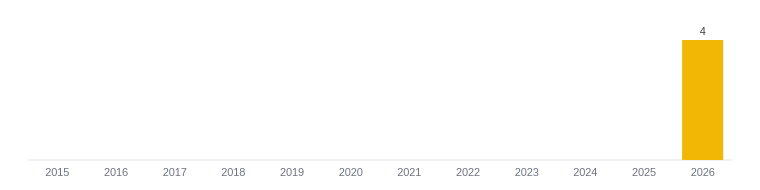
From that inspection OSHA issued 4 citation items: 4 serious.

OSHA proposed $46,340 in penalties and the amount has not been reduced.

Most often, OSHA cited 1926.651, excavations (2 items).

For context, across all construction employers the median penalty per cited inspection since 2015 is $3,080. Century Max Industries Corp. averages $46,340 over 1 cited inspection in that time.

Century Max Industries Corp.: OSHA citation items per year, 2026 to 2026
Citation items per year, by inspection date.

New York · latest 90 days of OSHA records

361employers cited

5 of them in the same industry

Get notified the morning OSHA posts each new citation in New York: the employer, the site address, the rules broken and the penalty.

See who gets cited next

Latest cited in New York

Checking a subcontractor, a client or your own company? Watch Century Max Industries Corp. and get notified the morning OSHA posts a new citation for it.

Watch this company

Inspection history

Inspection 349035709 OPENED JUL 7, 2026Open

Complaint · Partial · Safety · 56 employees at the site · Open

220 Nininger Rd., Monroe, NY 10950 · Poured Concrete Foundation and Structure Contractors · OSHA's record · Phone and website on Google Maps

Citation and ruleTypeProposedCurrentIssuedStatus
Citation 1, item 1
29 CFR 1926.501(b)(1) · Fall protection in construction
Serious$11,585$11,585Sep 22, 2026Contested
Citation 1, item 2
29 CFR 1926.651(j)(1) · Excavations
Serious$11,585$11,585Sep 22, 2026Contested
Citation 1, item 3
29 CFR 1926.651(k)(1) · Excavations
Serious$11,585$11,585Sep 22, 2026Contested
Citation 1, item 4
29 CFR 1926.652(a)(1) · Trench protection
Serious$11,585$11,585Sep 22, 2026Contested

The rules behind these citations

Current text from the Code of Federal Regulations. Some citations were issued under older wording.

29 CFR 1926.501 · Fall protection in construction

29 CFR 1926.501(b)(1)

(b)(1) Unprotected sides and edges. Each employee on a walking/working surface (horizontal and vertical surface) with an unprotected side or edge which is 6 feet (1.8 m) or more above a lower level shall be protected from falling by the use of guardrail systems, safety net systems, or personal fall arrest systems.

29 CFR 1926.651 · Excavations

29 CFR 1926.651(j)(1)

(j) Protection of employees from loose rock or soil. (1) Adequate protection shall be provided to protect employees from loose rock or soil that could pose a hazard by falling or rolling from an excavation face. Such protection shall consist of scaling to remove loose material; installation of protective barricades at intervals as necessary on the face to stop and contain falling material; or other means that provide equivalent protection.

29 CFR 1926.651(k)(1)

(k) Inspections. (1) Daily inspections of excavations, the adjacent areas, and protective systems shall be made by a competent person for evidence of a situation that could result in possible cave-ins, indications of failure of protective systems, hazardous atmospheres, or other hazardous conditions. An inspection shall be conducted by the competent person prior to the start of work and as needed throughout the shift. Inspections shall also be made after every rainstorm or other hazard increasing occurrence. These inspections are only required when employee exposure can be reasonably anticipated.

29 CFR 1926.652 · Trench protection

Other poured concrete foundation and structure contractors employers in New York

Alert subscribers get notified of each newly cited employer in New York the morning it is posted. See the alert plans.

Source: U.S. Department of Labor, OSHA enforcement data. A citation is OSHA's allegation; employers can contest it, and the status column shows where each item stands. Something wrong on this page? Tell us.