Inspection 347600496 OPENED JUL 1, 2024Closed
O'brien Lane, Queenstown, MD 21658 · Site Preparation Contractors · OSHA's record · Phone and website on Google Maps
No citations from this inspection.
Cole Ventures, Inc. has 3 OSHA inspections on record in Maryland, the first in 1993.
OSHA's last visit started on Jul 1, 2024 after an accident, in Queenstown.
Across those inspections OSHA issued 9 citation items: 7 serious and 2 other-than-serious.
OSHA proposed $6,900 in penalties. After settlements and reviews the total is $3,950, down 43%.
For context, across all staffing, cleaning and waste services employers the median penalty per cited inspection since 2015 is $2,208. Cole Ventures, Inc. averages $1,950 over 1 cited inspection in that time.
1 inspection on this page followed a fatal incident.
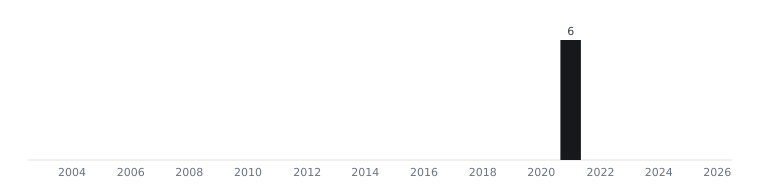
Maryland · latest 90 days of OSHA records
194employers cited
4 of them in the same industry
Get notified the morning OSHA posts each new citation in Maryland: the employer, the site address, the rules broken and the penalty.
See who gets cited nextLatest cited in Maryland
Checking a subcontractor, a client or your own company? Watch Cole Ventures, Inc. and get notified the morning OSHA posts a new citation for it.
Watch this companyO'brien Lane, Queenstown, MD 21658 · Site Preparation Contractors · OSHA's record · Phone and website on Google Maps
No citations from this inspection.
8480 Arbutus Road, Riviera Beach, MD 21122 · Landscaping Services · OSHA's record · Phone and website on Google Maps
Incident on Nov 9, 2021: Employee fractures fingers when struck by tree limb
At 3:00 p.m. on November 9, 2021, an employee was in an aerial lift 12 feet from the ground. He was trimming a 35-foot limb from a 60-foot elm tree with a chain saw. After the employee cut the limb, the limb fell and hit the ground. Then the limb bounced and tilted upwards. When the limb swung back towards the ground, it struck the basket of the aerial lift and the employee's hand gripping the basket. The employer applied first aid to the employee's hand and contacted the paramedics. The employee was hospitalized after fracturing three of his fingers.
| Citation and rule | Type | Proposed | Current | Issued | Status |
|---|---|---|---|---|---|
| Citation 1, item 1 29 CFR 5-503(A) |
Serious | $1,500 | $900 | Jan 14, 2022 | Final |
| Citation 1, item 2a 29 CFR 09.12.28.05I(2)(A) |
Serious | $1,750 | $1,050 | Jan 14, 2022 | Final |
| Citation 1, item 2b 29 CFR 09.12.28.07(C) |
Serious | $0 | $0 | Jan 14, 2022 | Final |
| Citation 1, item 2c 29 CFR 09.12.28.07F(1) |
Serious | $0 | $0 | Jan 14, 2022 | Final |
| Citation 2, item 1 29 CFR 09.12.28.05C |
Other-than-serious | $0 | $0 | Jan 14, 2022 | Final |
| Citation 2, item 2 29 CFR 09.12.28.07I(1) |
Other-than-serious | $0 | $0 | Jan 14, 2022 | Final |
#9 Holly Drive South, Annapolis, MD 21401 · OSHA's record · Phone and website on Google Maps
Incident on Nov 23, 1993 (fatal): Employee dies when struck in head by uprooted tree
Employee #1 of Cambridge, MD, was helping the owner of the company clear land to build a house. His assigned job was to assist the company owner and to run the chipper machine. Employee #1 was standing by the chipper machine and facing away from the owner, who was operating an International truck front end loader to pu sh the trees over. The owner was uprooting and pushing trees over, when an 80 fo ot gum tree started to become uprooted. As he pushed the tree away from Employee #1, the tree trunk began to twist and fall in the direction of Employee #1. A 2 1/2 inch thick branch struck Employee # 1 in the back of his head and killed hi m.
Incident on Nov 23, 1993: Employees injured when struck by boom
Employee #1, a crane operator who was to be checked out in operating the subcont ractor's concrete pumper boom the following day, was observing the subcontractor 's maintenance crew repair and service the boom (Schwing model KVM 28, KBM-28725 ). Employee #1 was standing on the boom's counterweights. The boom was parallel to a double live track 30 to 35 ft to the outside gauge of the track. The boom w as partially extended on an angle toward the track, a length of approximately 60 ft, and was approximately 1 to 2 ft from the outside gauge of the rail track, 6 to 10 ft above the track. The crew was in this position 10 to 20 minutes when a passing train contacted the boom end, collapsing it and causing it to strike Em ployees #1 and #2. They suffered minor contusions. The subcontractor's crew was working with a blocked view up and down the tracks. They were wearing hard hats. Employee #1 had been given hazard recognition training pertaining to working by a railroad. Employee #1 had asked the subcontractor's crew about boom clearance prior to the accident. He was told it was O.K. The on-site track flagman had le ft approximately 15 minutes before the accident.
Incident on Nov 15, 1993: Employee injured when struck by boom
Employee #1 was helping a service technician/manager repair and service a concre te pumper placement boom (Schwing KVM 28, KBM28725). The boom was approximately 30 to 35 ft from the edge of some double railroad tracks (live track area). Whil e they were attempting to fix a defective remote control box, they found that a maladjusted pipe clamp was preventing full closure of the boom. They decided to extend the boom at an angle toward the track and adjust the clamp. The boom was partially extended (approximately 60 ft); the knuckle joint on the last (third) boom section was resting approximately 1 to 2 ft from the outer gauge of the clo sest live track and approximately 6 to 10 ft above track level. Employee #1 and the service technician were working approximately midway on the boom with their view obstructed both up and down the tracks. They had been working 10 to 20 minu tes when a passing train contacted the end of the boom, which collapsed and stru ck Employee #1, who suffered minor contusions. Immediately prior to the train's contact, the service manager had been warned of an incoming train, and had attem pted, unsuccessfully, to reach the controls. The train's speed was approximately 50 mph. The on-site track flagman had left approximately 15 minutes before the accident. The company had little to no experience in live tracks, no hazard reco gnition training for railroad operation, and no training for normal operations. Employees were wearing hard hats. Employee #2, an employee for the general contr actor on site, who was observing the operation from the boom's counterweights, w as also struck and suffered contusions.
| Citation and rule | Type | Proposed | Current | Issued | Status |
|---|---|---|---|---|---|
| Citation 1, item 1 29 CFR 50104 A |
Serious | $2,600 | $1,500 | Dec 29, 1993 | Closed |
| Citation 2, item 1 29 CFR 1926.28(a) · Personal protective equipment |
Serious | $525 | $250 | Dec 29, 1993 | Closed |
| Citation 2, item 2 29 CFR 1926.100(a) · Hard hats in construction |
Serious | $525 | $250 | Dec 29, 1993 | Closed |
Current text from the Code of Federal Regulations. Some citations were issued under older wording.
29 CFR 1926.100(a)
(a) Employees working in areas where there is a possible danger of head injury from impact, or from falling or flying objects, or from electrical shock and burns, shall be protected by protective helmets.
29 CFR 1926.28(a)
(a) The employer is responsible for requiring the wearing of appropriate personal protective equipment in all operations where there is an exposure to hazardous conditions or where this part indicates the need for using such equipment to reduce the hazards to the employees.
Alert subscribers get notified of each newly cited employer in Maryland the morning it is posted. See the alert plans.
Source: U.S. Department of Labor, OSHA enforcement data. A citation is OSHA's allegation; employers can contest it, and the status column shows where each item stands. Something wrong on this page? Tell us.