Golden State Foods LLC has 30 OSHA inspections on record in California, the first in 1987.
OSHA's last visit started on Apr 15, 2026 after a complaint, in City Of Industry, and the case has not closed yet.
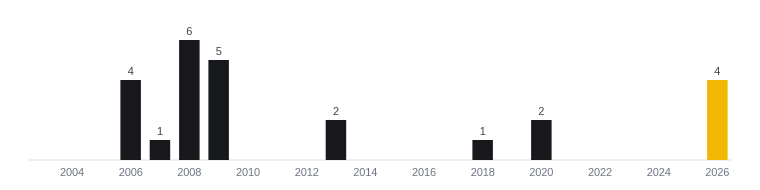
Across those inspections OSHA issued 46 citation items: 12 serious, 2 repeat and 32 other-than-serious.
OSHA proposed $261,820 in penalties. After settlements and reviews the total is $130,075, down 50%.
Most often, OSHA cited 1910.212, machine guarding (2 items).
For context, across all manufacturing employers the median penalty per cited inspection since 2015 is $4,870. Golden State Foods LLC averages $2,987 over 3 cited inspections in that time.
2 inspections on this page followed a fatal incident.
Golden State Foods LLC also files yearly injury logs with OSHA, summarized below.
Citation items per year, by inspection date.
California · latest 90 days of OSHA records
1,133employers cited
Get notified the morning OSHA posts each new citation in California: the employer, the site address, the rules broken and the penalty.
Incident on Dec 21, 2020 (fatal): Employee with covid-19 infection dies
An employee was working for a wholesale food distributor when he was exposed to COVID-19. The employee became ill with COVID-19, was hospitalized, and subsequently died from his infection at 9:00 a.m. on December 21, 2020.
No citations from this inspection.
Inspection 344862594 OPENED JUL 29, 2020Closed
Accident · Partial · Safety · 500 employees at the site · Closed Aug 16, 2022
Incident on Jul 19, 2020: Employee with covid-19 infection is hospitalized
On July 19, 2020, an employee who worked for a meat products wholesaler called off work due to illness. The employer was notified that the employee was hospitalized on the same date. The employee was exhibiting symptoms consistent with COVID-19 including shortness of breath, but no information regarding COVID-19 testing is included in the narrative. The date, time and other details leading up to exposure are not indicated in the narrative. The employer did not have an effective COVID-19 Prevention Program in place.
Incident on Jul 31, 2017: Employee trips over empty pallets and fractures ankle
At 7:45 p.m. on July 31, 2017, Employee #1 was pulling a pallet jack. The employee tripped over a stack of empty pallets, and fractured his left ankle. Employee #1 was hospitalized for his injury.
No citations from this inspection.
Inspection 341848836 OPENED OCT 18, 2016Closed
Unprogrammed related · Partial · Safety · 480 employees at the site · Closed Feb 13, 2017
Incident on Dec 14, 2012: Sanitation worker burned with leak on high pressure hose
At approximately 2:00 a.m. on December 14, 2012, Employee #1, a 62-year-old male Sanitation Worker, with Golden State Foods, was performing his normal duties of washing blenders and the floors. While on a forklift and moving things around, a coworker informed Employee #1 that it was time to clean the outside area and t o go get the high pressure hose. While preparing to use a yellow high pressure h ose (rated for 3000 psi) with hot water (approximately 140 F, 1000 psi) to clean just outside of the compounding area, the hose sprung a leak. Employee #1 stepp ed on the leak with his right foot in order to plug the leak. Employee #1 was we aring rubber work boots and rain gear at the time of the incident. The high pres sure water eventually penetrated the right boot and filled the boot partially wi th hot water. Employee #1 sustained serious burns to his right foot and ankle. P aramedics were called and Employee #1 was hospitalized for approximately two mon ths and had two toes on his right foot amputated. The Employer was engaged in fo od processing.
Citation and rule
Type
Proposed
Current
Issued
Status
Citation 1, item 1
29 CFR 3203 A04
Other-than-serious
$420
$0
Jun 14, 2013
Final
Citation 2, item 1
29 CFR 3328 B
Serious
$18,000
$5,000
Jun 14, 2013
Final
Inspection 316345131 OPENED OCT 9, 2012Closed
Accident · Partial · Safety · 410 employees at the site · Closed Jan 17, 2013
Incident on Aug 9, 2012: Employee hurt in roller accident
At approximately 7:00 p.m. on August 9, 2012, Employee #1 was working alone in t he hot sauce department, attempting to change the roll of plastic film on the pa ckaging machine. The plastic film is consumed in the process of making small pac kets of sauces. The rolls of plastic film are raised using an electric hoist. Th e injury occurred when Employee #1's left finger became caught between the roll of plastic film and the machinery door's frame. Employee #1 accidentally pressed the down button instead of the up button during the accident, causing the film roll to move down instead of up as he intended. Employee #1 was taken to a local area hospital where he was later released.
No citations from this inspection.
Inspection 312667231 OPENED JUL 14, 2011Closed
Accident · Partial · Safety · 417 employees at the site · Closed Dec 15, 2011
Incident on Jul 21, 2009 (fatal): Employee is killed by robotic palletizer
At approximately 7:55 a.m. on July 21, 2009, Employee #1 was operating a robotic palletizer for Golden State Foods, Inc., a food processor and packager for fast food restaurants. She entered the caged robotic palletizer cell while the robot ic palletizer was running. She had not deenergized the equipment. Her torso was crushed by the arms of the robotic palletizer as it attempted to pick up boxes o n the roller conveyor. She was killed.
Citation and rule
Type
Proposed
Current
Issued
Status
Citation 1, item 1
29 CFR 3203 A
Serious
$18,000
$14,000
Jan 20, 2010
Final
Citation 2, item 1
29 CFR 3314 C
Serious
$70,000
$56,000
Jan 20, 2010
Final
Citation 3, item 1
29 CFR 3314 G
Serious
$7,650
$6,120
Jan 20, 2010
Final
Citation 4, item 1
29 CFR 3314 H
Serious
$7,650
$6,120
Jan 20, 2010
Final
Inspection 312661101 OPENED JUN 3, 2009Closed
Accident · Partial · Safety · 350 employees at the site · Closed Dec 13, 2018
Incident on Apr 26, 2009: Employee crushes arm when caught between rollers
On April 26, 2009, Employee #1 was performing his regularly-assigned task of ope rating a machine to ensure that ketchup packages were properly filled. He worked at a facility that prepares and packages condiments and foods. The machine was a Winpak, Model Number L-18, Serial Number 18269W1, Machine Number 14 with a con veyor called the Safeline Metal Detection Conveyor. As Employee #1 attempted to remove clear sticky packages from the conveyor belt with a piece of paper, the c onveyor pulled his left arm into the conveyor belt. His left elbow became caught and pinned between the rollers, crushing his arm and causing elbow fractures. E mployee #1 was transported to a medical center, where he underwent treatment, in cluding surgery and was hospitalized. Upon investigation of the machine, the tri angular area, which was approximately 4 in. high and 12 in. wide below the plexi glass guard, was not guarded by the frame of the machine, or by location. It had a hazardous in-running action, including pinch points/nip points from the rolle rs of the belt, which exposed employees working in the area to entanglement haza rds due to the rotating parts.
Citation and rule
Type
Proposed
Current
Issued
Status
Citation 1, item 1
29 CFR 3999 B
Other-than-serious
$13,500
$850
Mar 28, 2010
Final
Inspection 312310642 OPENED DEC 11, 2008Closed
Follow-up · Partial · Safety · 350 employees at the site · Closed Aug 12, 2015
Incident on Feb 22, 2008: Two employees are burned when splashed by hot water
At approximately 11:30 p.m. on February 22, 2008, Employee #1, a food technologi st, and Employee #2, a maintenance mechanic, were walking near a CIP-ketchup pre ssurized pipe line. This line was being worked on to clear a blockage and a clam p cover on a pipe had been loosened to release pressure. Hot pressurized water, 200 degrees F, was being used. As Employee #1 and #2 were walking, water rushed out from the loosened pipe. The area was not blocked off or otherwise marked to indicate to stay away. Employee #1 was hospitalized for burns, and Employee #2 w as treated and released for burns.
Citation and rule
Type
Proposed
Current
Issued
Status
Citation 1, item 1
29 CFR 5194 F04
Other-than-serious
$750
$750
Aug 13, 2008
Final
Citation 1, item 2
29 CFR 3341 C
Other-than-serious
$750
$750
Aug 13, 2008
Final
Citation 2, item 1
29 CFR 3329 D
Other-than-serious
$18,000
$1,500
Aug 13, 2008
Final
Inspection 307184762 OPENED MAY 25, 2007Closed
Accident · Partial · Safety · 380 employees at the site · Closed Oct 5, 2007
Incident on Mar 29, 2007: Employee's finger is amputated in conveyor
At approximately 5:45 a.m. on March 29, 2007, an employee was moving a conveyor into place. After sanitizing the equipment the employee and Coworkers #1 and #2 were in the process of returning a conveyor back to its position for production. While guiding the conveyor into position, the employee's fingers became caught and subsequently amputated when it became caught between metal components of the conveyor as the conveyor bumped into a stationary object. The employee sustaine d an amputation to the first joint of the left hand small finger and was treated at Queen of the Valley Hospital, where he stayed approximately 12 hours.
No citations from this inspection.
Inspection 307184770 OPENED MAY 24, 2007Closed
Complaint · Partial · Safety · 380 employees at the site · Closed May 18, 2009
Incident on Nov 1, 2003: Employee's fingers are crushed in nip point
At approximately 7:15 a.m. on November 1, 2003, Employee #1, a maintenance mecha nic, was servicing the equipment in the Meat Department. The paddle on the finis hed grinder Machine Number 2, which pushed the meat into the grinder, was not wo rking. Employee #1 turned off a switch in order to service the paddle, but he tu rned off a wrong switch and also did not lock it out. He then pulled down the be lt of the belt and pulley drive to test it, but the machine started itself. His fingers were entrapped at the nip point of belt and pulley drive. Employee #1's left index finger was amputated and the tip of middle finger was crushed while s ervicing a meat paddle. The employee was not hospitalized.
No citations from this inspection.
Inspection 126085356 OPENED JAN 24, 2002Closed
Accident · Partial · Safety · 280 employees at the site · Closed Aug 31, 2006
Incident on Jan 17, 2002: Employee ampuates finger in a blending machine
At approximately 11:45 p.m. on January 17, 2002, Employee #1, a mixing and blend ing machine operator for Golden State Foods Incorporated, amputated his left ind ex finger. Just prior to the accident, Employee #1 went up the stairs to a landi ng to look into the blender Number 3 to see if there was any meat left that need ed to be cleared. He saw meat in the blender and instructed a coworker to start the blender to move the meat out. They both waited there until the meat was gone . Employee #1 instructed his coworker to turn the blender off. Employee #1 went below to the sample grinder to pull the meat that was left with his hand. He pla ced his hand into the sample grinder as far as the belly grinder. Then, he place d his hand in a second time. Employee #1 heard the blender Number 3 turn on, but did not have enough time to pull his hand out. The blender cut off his finger. His supervisors indicated that the blender Number 3 does automatically turn on w hen the load sensor has meat on it in order to move the meat out of the machine. However, employees indicated that the blender Number 3 to their knowledge had n ot done so before but believe that an employee had switched the blender Number 3 on without looking to see that Employee #1 had his arm inside the machine. His employer failed to apply logout and tagout procedures. Employee #1 was hospitali zed to treat his fingers.
Citation and rule
Type
Proposed
Current
Issued
Status
Citation 2, item 1
29 CFR 3314 A
Other-than-serious
$18,000
$700
Jun 21, 2002
Final
Inspection 126080662 OPENED JUN 23, 2000Closed
Complaint · Complete · Safety · 300 employees at the site · Closed Sep 12, 2006
Incident on Jul 22, 1996: Employee's little finger amputated in conveyor
At approximately 7:30 p.m. on July 22, 1996, Employee #1, of Golden State Foods, was working on machines 1-18 #5 and #6 in the ketchup room of the products depa rtment. Just before the accident, an approximately 6 in. by 12 in. by 18 in. box of picante sauce became jammed. Employee #1 cleared it and then returned to her workstation. She placed an empty box on the conveyer and waited for a moment fo r the pusher to come back so she could put on another box. As it returned, her l eft hand became caught between the pusher and the housing shield, amputating her little finger. The employer was cited for a serious violation of T8CCR 4002(a).
Citation and rule
Type
Proposed
Current
Issued
Status
Citation 1, item 1
29 CFR 4002 A
Other-than-serious
$5,000
$1,000
Oct 22, 1996
Final
Inspection 120264627 OPENED FEB 2, 1995Closed
Accident · Partial · Safety · 289 employees at the site · Closed May 8, 1996
Incident on Jan 24, 1995: Employee's finger lacerated by plastic plug
At approximately 4:00 p.m. on January 24, 1995, Employee #1, of the Golden State Foods Corp., was working on a plugger/filler machine (M713 tools and machine mo del TMCM, serial #13-843). The plastic plugs, which are covers for ice cream cup s, kept jamming in the machine. When Employee #1 tried to unjam a plug, she cut her right index finger on a cover's sharp edge. Employee #1 did not feel any pai n or notice any blood on her finger until another operator told her that her fin ger was bleeding. No accident-related violations were found during the investiga tion; however, a violation of T8CCR 4002 (a) was found and a citation issued.
Citation and rule
Type
Proposed
Current
Issued
Status
Citation 1, item 1
29 CFR 4002 A
Other-than-serious
$925
$350
Apr 4, 1995
Final
Inspection 120264098 OPENED DEC 22, 1994Closed
Referral · Partial · Safety · 289 employees at the site · Closed May 8, 1996
Incident on Dec 22, 1994: Employee's finger amputated in packaging machine
At approximately 8:00 a.m. on November 23, 1994, Employee #1, of the Golden Stat e Foods Corp., was operating a W.A. Lane, Inc., L-24 packaging machine, model L2 A, serial #2401. He opened the automatic packer unit while it was still running to remove film that had jammed in the machine. When he placed his right hand acr oss the seal area to remove the film, it became caught in the machine and his mi ddle finger was amputated. After the investigation, the employer was cited for a serious violation of T8CCR 4184(a). Other violations were found during the inve stigation and the employer cited.
Incident on Dec 22, 1994: Employees fingers amputated by guillotine blade
At approximately 9:00 a.m. on August 3, 1994, Employee #1 was repairing a W.A. L ane hot cake machine, model #478, serial #511. As he adjusted the machine's fron t guillotine blade, the back blades descended and amputated part of his left rin g finger and the tip (about 1/3) of his little finger. Employee #1 was taken to German Medical Center. After the investigation, the employer was cited for a ser ious violation of T8CCR 3314(a): lock out/block out.
Citation and rule
Type
Proposed
Current
Issued
Status
Citation 1, item 1
29 CFR 342 A
Other-than-serious
$375
$375
Apr 4, 1995
Final
Citation 1, item 2
29 CFR 3328 G
Other-than-serious
$375
$375
Apr 4, 1995
Final
Inspection 120263918 OPENED DEC 7, 1994Closed
Complaint · Partial · Safety · 289 employees at the site · Closed Apr 24, 1995
From the Form 300A summaries employers file with OSHA each year. Rate = recordable cases per 100 full-time workers.
In 2024, the City Of Industry site logged 7 recordable injuries or illnesses among about 408 workers: 1.7 per 100 full-time workers, against a median of 3.0 for its industry. Those cases cost 404 days away from work.
Site and year
Workers
Cases
Days-away cases
Rate
Industry median
Golden State Foods
City Of Industry · 2024
408
7
4
1.7
3.0
GSF- City of Industry
City Of Industry · 2017
458
17
6
3.0
4.6
Included with any plan: 5 more yearly logs from these sites, back to 2017, with each site's average rate over its latest three years. Already a subscriber? Sign in.
(a) Machine guarding—(1) Types of guarding. One or more methods of machine guarding shall be provided to protect the operator and other employees in the machine area from hazards such as those created by point of operation, ingoing nip points, rotating parts, flying chips and sparks. Examples of guarding methods are—barrier guards, two-hand tripping devices, electronic safety devices, etc.
29 CFR 1910.212(a)(3)(ii)
(ii) The point of operation of machines whose operation exposes an employee to injury, shall be guarded. The guarding device shall be in conformity with any appropriate standards therefor, or, in the absence of applicable specific standards, shall be so designed and constructed as to prevent the operator from having any part of his body in the danger zone during the operating cycle.
(9) Exposure adjustment. Safety guards of the types described in subparagraphs (3) and (4) of this paragraph, where the operator stands in front of the opening, shall be constructed so that the peripheral protecting member can be adjusted to the constantly decreasing diameter of the wheel. The maximum angular exposure above the horizontal plane of the wheel spindle as specified in paragraphs (b) (3) and (4) of this section shall never be exceeded, and the distance between the wheel periphery and the adjustable tongue or the end of the peripheral member at the top shall never exceed one-fourth inch. (See Figures O-18, O-19, O-20, O-21, O-22, and O-23.)
Alert subscribers get notified of each newly cited employer in California the morning it is posted. See the alert plans.
Source: U.S. Department of Labor, OSHA enforcement data. A citation is OSHA's allegation; employers can contest it, and the status column shows where each item stands. Something wrong on this page? Tell us.