Inspection 348526187 OPENED SEP 24, 2025Closed
1201 South La Cadena Drive, Colton, CA 92324 · Structural Steel and Precast Concrete Contractors · OSHA's record · Phone and website on Google Maps
No citations from this inspection.
Fresno, California · Concrete Pipe Manufacturing · NAICS 327332
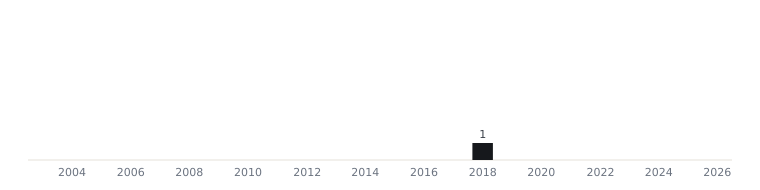
OSHA has inspected Hydro Conduit, LLC 9 times in California since 1987.
The latest one began on Sep 24, 2025 after a complaint, in Colton.
Those inspections ended with 14 citation items: 5 serious and 9 other-than-serious.
Penalties were first proposed at $19,480 and now stand at $6,125, 69% lower after settlements or reviews.
Grinders and abrasive wheels comes up most often in these citations: 2 items under 1910.215.
How that compares: the median penalty per cited inspection for manufacturing employers since 2015 is $4,500, and Hydro Conduit, LLC averages $5,000 (1 cited inspection).
1 inspection on this page followed a fatal incident.
Want to know if OSHA cites Hydro Conduit, LLC again? Add it to a watchlist and we will email you the morning the citation shows up.
Watch this company1201 South La Cadena Drive, Colton, CA 92324 · Structural Steel and Precast Concrete Contractors · OSHA's record · Phone and website on Google Maps
No citations from this inspection.
385 Tower Road, American Canyon, CA 94503 · Concrete Pipe Manufacturing · OSHA's record · Phone and website on Google Maps
Incident on Dec 11, 2018: Employee fractures leg when struck by sledgehammer
At 9:30 a.m. on December 11, 2018, an employee was working as a laborer for a firm that manufactured concrete pipe. He had worked for the firm for about 11.5 years. The firm employed about 900 people, with some 13 employees working at a pipe plant. The incident occurred in a pit at the plant. The employee was using a 4 pound (1.8 kg) sledgehammer to clean concrete residue from around a broken bolt in a Turmac core base in preparation of replacing the bolt. His supervisor had instructed him to prepare the area around the bolt while the supervisor went to get a replacement bolt. The core base was at knee height. Although the supervisor considered that it would be safer working on the bolt with it at waist height, raising the equipment would have required undoing the lockout/tagout of the system. Thus the supervisor decided to leave the Turmac core base at the level it was at when the bolt was found. The employee had a choice of tools for removing the concrete residue, including the sledgehammer, a pneumatic needling gun, and a pneumatic chisel. The employee used an overstrike with the sledgehammer. The sledgehammer glanced off the concrete material on the core base and struck the employee's left shin. He suffered a fracture to his lower left leg. He was transported to a hospital. He was hospitalized for more than 24 hours. The incident occurred after the employer had launched an initiative to remove all unnecessary sledgehammers from its manufacturing facilities to reduce the injury rate. The employer had issued a directive that there was no need to use a sledgehammer in the pit, and that the use of a sledgehammer there required the plant manager's approval. The plant manager had conducted a survey to identify and remove unnecessary sledgehammers from the plant. The manager had not approved the use of a sledgehammer in the pit. The supervisor was aware of the survey and directive but chose not to turn in the pit sledgehammer, thinking it should stay for some tasks.
| Citation and rule | Type | Proposed | Current | Issued | Status |
|---|---|---|---|---|---|
| Citation 1, item 1 29 CFR 3203(A) |
Serious | $18,000 | $5,000 | Jun 5, 2019 | Final |
23200 Temescal Cyn Rd, Corona, CA 91719 · OSHA's record · Phone and website on Google Maps
Incident on Feb 1, 1995 (fatal): Employee crushed by concrete mixer
Employee #1 was doing a pre-operation inspection on a concrete mixer when a cowo rker started the mixer. The mixer had not been locked out by Employee #1. His sp leen was ruptured and he was killed.
| Citation and rule | Type | Proposed | Current | Issued | Status |
|---|---|---|---|---|---|
| Citation 1, item 1 29 CFR 3314 B |
Other-than-serious | $100 | $100 | Apr 21, 1995 | Closed |
4150 N. Brawley, Fresno, CA 93722 · OSHA's record · Phone and website on Google Maps
Incident on Jul 26, 1994: Employee's fingers partially amputated by machine shaft
Employees of the Hydro Conduit Corp. were attempting to dislodge the inner shaft on a drain pipe forming machine to replace a shaft bearing. Employee #1 wanted to protect the threaded end of the shaft with its nut and was about to install a nut when the shaft suddenly gave way. His fingers, which were under the shaft, struck against a 6 in. by 6 in. wood block held up by two steel saw horses. The tip of his left index finger and right little finger were partially amputated.
No citations from this inspection.
4150 N. Brawley, Fresno, CA 93722 · OSHA's record · Phone and website on Google Maps
No citations from this inspection.
Hwy. 32, Orland, CA 95963 · OSHA's record · Phone and website on Google Maps
| Citation and rule | Type | Proposed | Current | Issued | Status |
|---|---|---|---|---|---|
| Citation 1, item 1 29 CFR 3382 A |
Other-than-serious | $0 | $0 | Sep 9, 1991 | Closed |
4150 N. Brawley, Fresno, CA 93722 · OSHA's record · Phone and website on Google Maps
| Citation and rule | Type | Proposed | Current | Issued | Status |
|---|---|---|---|---|---|
| Citation 1, item 1 29 CFR 5022 A01 |
Serious | $350 | $350 | Aug 14, 1991 | Closed |
Hwy. 32, Orland, CA 95963 · OSHA's record · Phone and website on Google Maps
| Citation and rule | Type | Proposed | Current | Issued | Status |
|---|---|---|---|---|---|
| Citation 1, item 1 29 CFR 3278 E05 |
Other-than-serious | $0 | $0 | Jun 10, 1991 | Closed |
| Citation 1, item 2 29 CFR 3279 D05 |
Other-than-serious | $0 | $0 | Jun 10, 1991 | Closed |
| Citation 1, item 3 29 CFR 4086 |
Other-than-serious | $0 | $0 | Jun 10, 1991 | Closed |
| Citation 1, item 4 29 CFR 3209 A |
Other-than-serious | $0 | $0 | Jun 10, 1991 | Closed |
| Citation 2, item 1 29 CFR 3210 B |
Serious | $150 | $150 | Jun 10, 1991 | Closed |
1205 S. Rancho Ave., Colton, CA 92324 · OSHA's record · Phone and website on Google Maps
| Citation and rule | Type | Proposed | Current | Issued | Status |
|---|---|---|---|---|---|
| Citation 1, item 1 29 CFR 1910.212(a)(1) · Machine guarding |
Serious | $400 | $250 | Oct 9, 1987 | Closed |
| Citation 1, item 2 29 CFR 1910.252(b)(4)(ixc) · Welding fire safety |
Serious | $480 | $275 | Oct 9, 1987 | Closed |
| Citation 2, item 1 29 CFR 1910.215(a)(4) · Grinders and abrasive wheels |
Other-than-serious | $0 | $0 | Oct 9, 1987 | Closed |
| Citation 2, item 2 29 CFR 1910.215(b)(9) · Grinders and abrasive wheels |
Other-than-serious | $0 | $0 | Oct 9, 1987 | Closed |
| Citation 2, item 3 29 CFR 1910.242(b) · Hand and power tools |
Other-than-serious | $0 | $0 | Oct 9, 1987 | Closed |
Current text from the Code of Federal Regulations. Some citations were issued under older wording.
29 CFR 1910.212(a)(1)
(a) Machine guarding—(1) Types of guarding. One or more methods of machine guarding shall be provided to protect the operator and other employees in the machine area from hazards such as those created by point of operation, ingoing nip points, rotating parts, flying chips and sparks. Examples of guarding methods are—barrier guards, two-hand tripping devices, electronic safety devices, etc.
29 CFR 1910.215(a)(4)
(4) Work rests. On offhand grinding machines, work rests shall be used to support the work. They shall be of rigid construction and designed to be adjustable to compensate for wheel wear. Work rests shall be kept adjusted closely to the wheel with a maximum opening of one-eighth inch to prevent the work from being jammed between the wheel and the rest, which may cause wheel breakage. The work rest shall be securely clamped after each adjustment. The adjustment shall not be made with the wheel in motion.
29 CFR 1910.215(b)(9)
(9) Exposure adjustment. Safety guards of the types described in subparagraphs (3) and (4) of this paragraph, where the operator stands in front of the opening, shall be constructed so that the peripheral protecting member can be adjusted to the constantly decreasing diameter of the wheel. The maximum angular exposure above the horizontal plane of the wheel spindle as specified in paragraphs (b) (3) and (4) of this section shall never be exceeded, and the distance between the wheel periphery and the adjustable tongue or the end of the peripheral member at the top shall never exceed one-fourth inch. (See Figures O-18, O-19, O-20, O-21, O-22, and O-23.)
Source: U.S. Department of Labor, OSHA enforcement data. A citation is OSHA's allegation; employers can contest it, and the status column shows where each item stands. Something wrong on this page? Tell us.