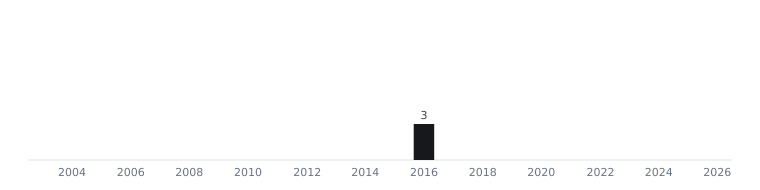
Incident on Dec 25, 1998 (fatal): Employee died from unclear cause
On December 14, 1998, Employee #1, an inventory control specialist in the Shippi ng and Receiving Department in building CA-1, notified his management that he be came ill after inhaling fumes while operating a foam packaging machine, Instapak SPK, Serial Number SP 3914, Sealed Air Corporation, earlier that day. He was ev aluated by the site collateral duty first aid team and sent to Washington Clinic , where he was evaluated over again, and diagnosed with shortness of breath due to unclear cause. A follow-up was recommended with a pulmonologist, which was pe rformed at Kaiser Permanente Health Clinic on December 15, 1998 and December 16, 1998. The December 15, 1998 evaluation prescribed avoiding all exposure to poly urethane resin due to reported dyspnea and throat irritation, nausea and vomitin g. The December 16, 1998 evaluation provided a return-to-work date for December 20, 1998 with full duties and no restrictions. However, it appeared Employee #1 did not return to work. Employee #1 was admitted to Kaiser Emergency Room on Dec ember 23, 1998 and released. Two days later, on December 25, 1998, paramedics we re called to the employee's home because of Employee #1's seizures and unconscio usness. Employee #1 was taken to the Eden Medical Center in Castro Valley, Calif ornia at 1:42 a.m. on December 25, 1998, where he died at 2:02 a.m. The coroner' s investigation indicated the cause of death as pulmonary embolism due to membra nous glomerulonephropathy caused by chronic viral hepatitis. The medical record was inconclusive whether the occupational exposure was a factor that caused Empl oyee #1's illness and death. Employee #1's employer who was a manufacturer of el ectronic and computer equipment demonstrated historic air monitoring data provid ed to the employer by the manufacturer. The historic data indicated values rangi ng between 0.001 and 0.0045 parts per million. The State of California Division of Occupational Safety and Health's Permissible Exposure Limit, 8 hour-Time weig hted average, is 0.005 parts per million. Exposure monitoring was not performed by the employer by the time of Employee #1's last operation of the equipment. Ho wever, area monitoring was subsequently performed on January 4, 1999. Employee # 1's duties included operation of a foam packaging machine. Solutions A and B wer e automatically mixed by the machine just before dispensing into bags. Solution A was composed of polymeric isocyanate, 4,4'-diphenylmethane diisocyanate, MDI, Chemical Abstracts Service Number 101-68-8. When mixed, the two components react ed to form foam inside the bags, which were then used in shipment boxes for insu lation and protection of electronic equipment. On February 19, 1998, the equipme nt was installed in building CA-8. On this date, Employee #1 and other inventory control employees received training and instruction on operational procedures a nd including safety and health information governing operation of the equipment. Employee #1 was originally stationed in building CA-8. The equipment was moved to building CA-1 during the month of June 1998, and Employee #1's duty station w as subsequently relocated to CA-1. Employee #1did not regularly operate the mach ine, but operated it on a fill-in or as-need basis, depending on shipment load a nd absences of the primary operator. The equipment was operated for 30 to 120 mi nutes on a daily basis. The size of the room was roughly 30-yd- by-40-yd with a height of roughly 20 ft.