OSHA has inspected NJ Transit 14 times in New Jersey since 2002.
The latest one began on Sep 21, 2022 on a referral, in Kearny.
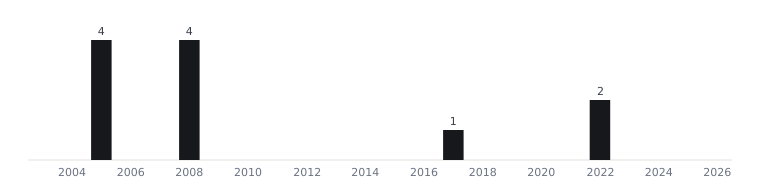
Those inspections ended with 11 citation items: 10 serious and 1 other-than-serious.
Penalties were first proposed at $13,610 and still stand at $13,610.
Electrical wiring methods comes up most often in these citations: 2 items under 1910.305.
How that compares: the median penalty per cited inspection for staffing, cleaning and waste services employers since 2015 is $2,201, and NJ Transit averages $6,805 (2 cited inspections).
The Wage and Hour Division has 2 cases on it since 2015, with $0 in back wages owed to workers.
Citation items per year, by inspection date.
New Jersey · latest 90 days of OSHA records
270employers cited
5 of them in the same industry
Get notified the morning OSHA posts each new citation in New Jersey: the employer, the site address, the rules broken and the penalty.
29 CFR 1910.125(c)(1)(i) · Additional requirements for dipping and coating operations that use flammable liquids or liquids with flashpoints greater than 199.4 °F (93 °C)
(iv) The employer shall also provide, at no cost to employees who perform housekeeping operations in an area which contains ACM or PACM, an asbestos awareness training course, which shall at a minimum contain the following elements: health effects of asbestos, locations of ACM and PACM in the building/facility, recognition of ACM and PACM damage and deterioration, requirements in this standard relating to housekeeping, and proper response to fiber release episodes, to all employees who perform housekeeping work in areas where ACM and/or PACM is present. Each such employee shall be so trained at least once a year.
(h) Employee information and training. (1) Employers shall provide employees with effective information and training on hazardous chemicals in their work area at the time of their initial assignment, and whenever a new chemical hazard the employees have not previously been trained about is introduced into their work area. Information and training may be designed to cover categories of hazards (e.g., flammability, carcinogenicity) or specific chemicals. Chemical-specific information must always be available through labels and safety data sheets.
29 CFR 1910.125 · Additional requirements for dipping and coating operations that use flammable liquids or liquids with flashpoints greater than 199.4 °F (93 °C)
29 CFR 1910.125(c)(1)(i)
(c) When must I provide a bottom drain? (1) You must provide a bottom drain for dip tanks that contain more than 500 gallons (1893 L) of liquid, unless:
Alert subscribers get notified of each newly cited employer in New Jersey the morning it is posted. See the alert plans.
Source: U.S. Department of Labor, OSHA enforcement data. A citation is OSHA's allegation; employers can contest it, and the status column shows where each item stands. Something wrong on this page? Tell us.