Inspection 347308389 OPENED FEB 27, 2024Closed
53 Santiago Avenue, Atherton, CA 94027 · New Housing For-Sale Builders · OSHA's record · Phone and website on Google Maps
No citations from this inspection.
Atherton, California · New Housing For-Sale Builders · NAICS 236117
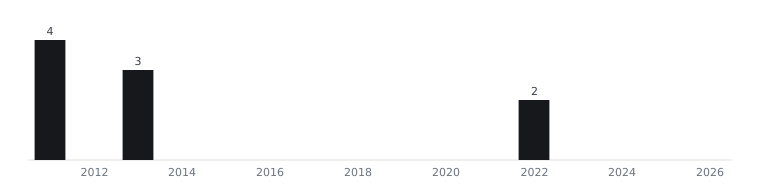
Since 2011, OSHA inspectors have visited Pacific Peninsula Group in California 7 times.
The most recent inspection opened on Feb 27, 2024 after an accident, in Atherton.
In all, OSHA issued 9 citation items: 3 serious and 6 other-than-serious.
The proposed penalties came to $56,285; today they stand at $32,685, 42% less.
Among construction employers, the typical cited inspection since 2015 ends with a $3,080 penalty. Pacific Peninsula Group averages $4,500 across 1 cited inspection.
California · latest 90 days of OSHA records
1,111employers cited
Get notified the morning OSHA posts each new citation in California: the employer, the site address, the rules broken and the penalty.
See who gets cited nextLatest cited in California
Checking a subcontractor, a client or your own company? Watch Pacific Peninsula Group and get notified the morning OSHA posts a new citation for it.
Watch this company53 Santiago Avenue, Atherton, CA 94027 · New Housing For-Sale Builders · OSHA's record · Phone and website on Google Maps
No citations from this inspection.
102 Britton Ave, Atherton, CA 94027 · New Housing For-Sale Builders · OSHA's record · Phone and website on Google Maps
| Citation and rule | Type | Proposed | Current | Issued | Status |
|---|---|---|---|---|---|
| Citation 2, item 1 29 CFR 3205(C)(10)(A) |
Other-than-serious | $4,050 | $450 | Jun 7, 2023 | Final |
| Citation 3, item 1 29 CFR 1670(A) |
Serious | $12,600 | $4,050 | Jun 7, 2023 | Final |
3379 Alva Ln., Pebble Beach, CA 93953 · New Housing For-Sale Builders · OSHA's record · Phone and website on Google Maps
No citations from this inspection.
95 Atherton Avenue, Atherton, CA 94027 · New Housing For-Sale Builders · OSHA's record · Phone and website on Google Maps
No citations from this inspection.
440 Walsh Rd., Atherton, CA 94027 · New Housing For-Sale Builders · OSHA's record · Phone and website on Google Maps
No citations from this inspection.
324 Bryant Street, Mountain View, CA 94041 · New Multifamily Housing Construction (except For-Sale Builders) · OSHA's record · Phone and website on Google Maps
Incident on Dec 11, 2013: Foreman's finger is amputated when unguarded saw kicks back
At approximately 10:00 a.m. on December 11, 2013, Employee #1, a carpenter forem an employed by Pacific Peninsula Group, was performing interior carpentry at a r esidential construction site. He was using a Bosch 4000 stand-mounted benchtop t able saw with a 10-inch blade to cut wood pieces for framing modifications. As h e was making the first rip cut to a section of laminated wood product measuring approximately 16 inches long by 1.75 inches wide by 4 inches high, his left hand contacted the blade. His left hand and fingers were severely cut. Emergency ser vices were called, and the Mountain View Fire Department responded. Employee #1 was transported to Stanford Hospital, where he was admitted and treated. His lef t middle finger, which had been completely severed past the first knuckle near t he palm, was surgically reattached. The left ring finger, which was severed thro ugh the bone past the first knuckle, also was reattached, but during a return ho spital visit this finger required surgical amputation. This event was timely rep orted to Cal/OSHA by the employer, and also reported by the Mountain View Fire D epartment. In its subsequent investigation, Cal/OSHA identified the employer as a construction management company performing as a general contractor for this re sidential apartment building project, with tasks being performed by its own empl oyees as well as subcontractors. The task Employee #1 was performing required tw o rip cuts to the section of laminated wood product to achieve the desired finis hed piece, because the blade was capable of rising only to approximately 3 inche s high. Employee #1 was working alone, and no witness to the event was identifie d. The guard for the Bosch 4000 included a hood, a splitter, and an anti-kickbac k device combined as a single unit. This guard/hood was at the site, but Employe e #1 stated the guard was not installed on the saw at the time he began to plan and perform his cuts. Employee #1 stated he set the rip fence to the right of th e blade at approximately 1.25 inches and had no other anti-kickback attachments, separate from the guard/hood, available to install. He also stated he did not i nstall any featherboards or jigs to use as he made cuts without the use of the g uard/hood. Employee #1 stated he was pushing and guiding the wood through the bl ade, with his right hand positioned at the end of the wood length nearest to him , and his left hand positioned on the top and at the end of the wood farther awa y from him. He stated there was no push block or push stick at the saw, and he d id not make one to use. He stated that the first cut was almost complete, and th e blade was about to come out at the back side of the wood piece, when the wood kicked back and shot past his right side. He stated his left hand was extended b ehind and over the saw blade before the cut, but was pulled back partially by th e kick-back, or his hand movement may have been reflexive. The result was that h is left hand contacted the blade. The investigation report included a comment th at the guard, anti-kickback, and spreader features of the Bosch 4000 were not se parable. They were designed to extend above and past the blade of the saw and wo uld not have allowed the uncut portion of the wood piece to have passed. The fir st cut of the employee's two-step cutting plan was similar to a dado or cut wher e the blade does not extend through the top of the wood. The report concluded th at the type of rip cut Employee #1 was making was allowable without use of the b lade's guard/hood only when additional protective devices, such as featherboards , were being used and separate anti-kickback devices had been installed. No prot ective devices, such as featherboards or anti-kickback attachments, were availab le or installed on the table saw during the time when the saw's guard/hood was n ot in place. No push sticks or push blocks were available during the time when t he table saw was being used. These devices also could have helped to protect the operator's hands from harm during adverse events such as kickbacks. Any of thes e protective methods might have helped prevent injury when this event occurred. The employer was issued the following citations: T8 4296(a) Serious Accident-rel ated: Failure to ensure provision and use of featherboards or jigs on a table sa w while cutting without a guard; T8 4300.1(c)(1) Serious Accident-related: Failu re to ensure the use of an anti-kickback device while performing ripping operati ons on a table saw; T8 4300.1(c)(2) Serious: Failure to ensure the provision of push sticks or push blocks for use at the location where table saws are being op erated; and T8 341(c)(1) Regulatory: Failure to obtain a project permit prior to beginning construction of a building intended to be over 36 feet above grade wh en complete.
| Citation and rule | Type | Proposed | Current | Issued | Status |
|---|---|---|---|---|---|
| Citation 1, item 1 29 CFR 341 C01 |
Other-than-serious | $650 | $650 | Apr 7, 2014 | Final |
| Citation 2, item 1 29 CFR 4296 A |
Serious | $14,400 | $14,400 | Apr 7, 2014 | Final |
| Citation 4, item 1 | Serious | $4,500 | $450 | Apr 7, 2014 | Final |
84 Marymont Avenue, Atherton, CA 94027 · New Housing For-Sale Builders · OSHA's record · Phone and website on Google Maps
Incident on Jul 27, 2011: Maintenance worker fractures heel in fall from roof
At approximately 2:00 p.m. on July 27, 2011, Employee #1 was on the cedar shingl e roof of a residence in Atherton, CA. He was cleaning windows and washing the s iding on the left side of the house. He noticed a cleaning cloth left behind by Employee #2, who had been working with him earlier. Intending to pick up the clo th, Employee #1 walked across the wide cedar shingle roof (approximately 6 feet wide). He walked from the front left corner of the house to the narrow roof (app roximately 2 feet wide) above the living room entry door. Employee #1 slipped on wet shingles as he bent down to pick up the cloth, and he fell to the patio dec k below, a fall height of 11.25 feet (135 inches). Employee #1 was taken to Sequ oia Hospital, where he was evaluated, determined to have suffered a serious frac ture of his left heel, treated, and eventually admitted on the day of the accide nt. Employee #1 underwent surgery of his left heel. He was discharged from the h ospital on August 2, 2011, to a skilled nursing facility, where he underwent reh abilitation for 22 days. The employer, Pacific Peninsula Group (PPG), Menlo Park , CA, is a real estate development division and general building contractor spec ializing in residential and office projects on the Mid-Peninsula. The employer a lso provides customer service to its clients, such as window and siding cleaning , minor plumbing repairs, and other small maintenance projects. The employer cal led in a late notification of this accident to the Division of Occupational Safe ty and Health (Cal/OSHA) on July 29, 2011, at 12:10 p.m. Investigation was initi ated at the employer's office on August 11, 2011. The work site, where the accid ent occurred, was inspected with the employer's Director of Customer Service on August 18, 2011. The division issued one Serious Accident-Related citation, alle ging violation of Title 8 of the California Code of Regulations (T8 CCR), sectio n 3210 (a) for employer's failure to protect its employees from falling through the use of guardrails or an alternate means, such as fall protection. The Divisi on also issued one General citation for employer's failure to have written Heat Illness Prevention Procedure, violation of T8 CCR, section 3395 (f) (3); and two Regulatory citations for Employer's failure to: record inspections to identify workplace hazards, violation of T8 CCR, section 3203 (b); and report to the Divi sion a serious injury within the required time frame, violation of T8 CCR 342 (a ).
| Citation and rule | Type | Proposed | Current | Issued | Status |
|---|---|---|---|---|---|
| Citation 1, item 1 29 CFR 3395 F03 |
Other-than-serious | $410 | $410 | Nov 30, 2011 | Closed |
| Citation 1, item 2 29 CFR 3203 B01 |
Other-than-serious | $275 | $275 | Nov 30, 2011 | Closed |
| Citation 1, item 3 29 CFR 342 A |
Other-than-serious | $5,000 | $5,000 | Nov 30, 2011 | Final |
| Citation 2, item 1 29 CFR 3210 A |
Other-than-serious | $14,400 | $7,000 | Nov 30, 2011 | Final |
Current text from the Code of Federal Regulations. Some citations were issued under older wording.
Alert subscribers get notified of each newly cited employer in California the morning it is posted. See the alert plans.
Source: U.S. Department of Labor, OSHA enforcement data. A citation is OSHA's allegation; employers can contest it, and the status column shows where each item stands. Something wrong on this page? Tell us.