Incident on May 30, 2017: Employee is struck by a pickup truck and sustains fractures
At 6:40 a.m. on May 30, 2017, Employee #1 was sweeping the pump island and empting the trash. As the employee walked back to the front entry of the establishment, she was struck by a pickup truck moving through the parking lot and knocked to the ground. Employee #1 sustained a fracture to her left tibia and ankle.
Citation and rule
Type
Proposed
Current
Issued
Status
Citation 1, item 1a
29 CFR 1910.132(a) · Personal protective equipment, general requirements
From the Form 300A summaries employers file with OSHA each year. Rate = recordable cases per 100 full-time workers.
In 2025, the Jacksonville site logged 0 recordable injuries or illnesses among about 7 workers: 0.0 per 100 full-time workers, against a median of 2.9 for its industry.
Site and year
Workers
Cases
Days-away cases
Rate
Industry median
Energy Dispatch - Jacksonville Office
Jacksonville · 2025
7
0
0
0.0
2.9
Severe injury reports
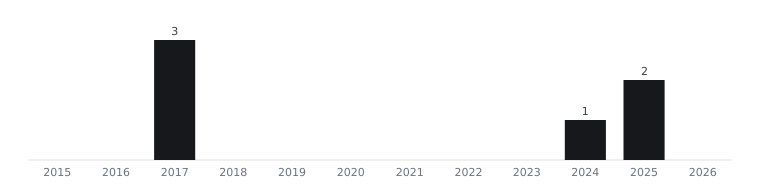
Employers must report any work-related amputation, in-patient hospitalization or loss of an eye to OSHA within 24 hours. 2 reports on file.
Sep 23, 2024, Jacksonville: Hospitalization · thermal burns third degree or higher · multiple body parts n.e.c.
An employee was pressure washing the parking lot. He walked over to fuel station #3 and began fueling the plastic container with 87 octane gasoline. The container overflowed and caught on fire, burning the employee. The employee sustained third-degree burns to his torso, both arms and both legs.
May 30, 2017, Ocala: Hospitalization · fractures · ankle(s)
While sweeping the parking area of a pump island, an employee was struck by a car that had just pulled away from the gas pumps. The employee suffered a fractured ankle and required surgery.
The rules behind these citations
Current text from the Code of Federal Regulations. Some citations were issued under older wording.
(h) Employee information and training. (1) Employers shall provide employees with effective information and training on hazardous chemicals in their work area at the time of their initial assignment, and whenever a new chemical hazard the employees have not previously been trained about is introduced into their work area. Information and training may be designed to cover categories of hazards (e.g., flammability, carcinogenicity) or specific chemicals. Chemical-specific information must always be available through labels and safety data sheets.
29 CFR 1910.132 · Personal protective equipment, general requirements
29 CFR 1910.132(a)
(a) Application. Protective equipment, including personal protective equipment for eyes, face, head, and extremities, protective clothing, respiratory devices, and protective shields and barriers, shall be provided, used, and maintained in a sanitary and reliable condition wherever it is necessary by reason of hazards of processes or environment, chemical hazards, radiological hazards, or mechanical irritants encountered in a manner capable of causing injury or impairment in the function of any part of the body through absorption, inhalation or physical contact.
29 CFR 1910.132(d)(1)
(d) Hazard assessment and equipment selection. (1) The employer shall assess the workplace to determine if hazards are present, or are likely to be present, which necessitate the use of personal protective equipment (PPE). If such hazards are present, or likely to be present, the employer shall:
29 CFR 1910.303 · Electrical equipment, general requirements
Alert subscribers get notified of each newly cited employer in Florida the morning it is posted. See the alert plans.
Source: U.S. Department of Labor, OSHA enforcement data. A citation is OSHA's allegation; employers can contest it, and the status column shows where each item stands. Something wrong on this page? Tell us.