Suit-Kote Corporation: OSHA inspections and violations
Cortland, New York · Highway, Street, and Bridge Construction · NAICS 237310
18inspections
35citation items
$58,227current penalties
Aug 9, 2023last inspection
Since 1987, OSHA inspectors have visited Suit-Kote Corporation in New York 18 times.
The most recent inspection opened on Aug 9, 2023 as a planned inspection, in Ithaca.
In all, OSHA issued 35 citation items: 23 serious and 12 other-than-serious.
The proposed penalties came to $91,654; today they stand at $58,227, 36% less.
The rule cited most here is 1910.1200 (hazard communication), 4 times.
Among construction employers, the typical cited inspection since 2015 ends with a $3,080 penalty. Suit-Kote Corporation averages $12,450 across 3 cited inspections.
2 inspections on this page followed a fatal incident.
Suit-Kote Corporation also files yearly injury logs with OSHA, summarized below.
It reported 1 severe injury to OSHA since 2015.
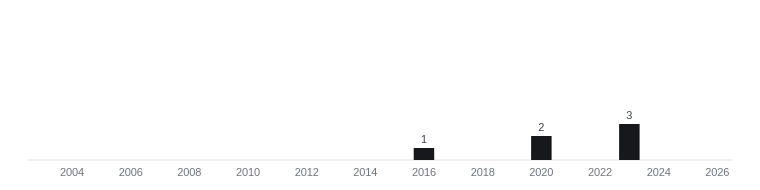
Citation items per year, by inspection date.
New York · latest 90 days of OSHA records
360employers cited
21 of them in the same industry
Get notified the morning OSHA posts each new citation in New York: the employer, the site address, the rules broken and the penalty.
Incident on Jul 21, 2020: Two employees incur electrical shock due to contact with ove
At 12:54 p.m. on July 21, 2020, Employee #1 and Employee #2, employed by a construction company, were operating controls on a paver when the dump truck bed was raised and contacted overhead power lines. This contact caused an electrical shock, with current passing through the equipment, through the employees, and into the ground. Employee #1 and Employee #2 were transported to the hospital, admitted, and treated for their injuries, while a coworker was treated without hospitalization.
Incident on Oct 9, 2019 (fatal): Employee is struck and killed by truck backing up
At 2:00 p.m. on October 9, 2019, an employee left his post as a flag person on a road repair project and began walking behind a truck (Micro Paving) that was backing up towards a paver. The employee was caught up in the rear tires of the truck and was killed by crushing injuries to his legs and pelvis.
No citations from this inspection.
Inspection 341725588 OPENED AUG 18, 2016Closed
Referral · Partial · Safety · 6 employees at the site · Closed Dec 28, 2016
Incident on May 8, 1998 (fatal): Employee killed when methyl alcohol vapors explode
Employee #1 was in a pole barn, using a 55-gallon drum as a work bench to cut a steel gusset plate. His immediate supervisor was behind him, welding extra "stee l paddles" for a loader used to pick up asphalt. The supervisor had been welding for about 30 min. when another coworker was directed to drain the cooling syste ms on three trucks, all "mount units," each of which contained about 20 gallons of a flammable product. Vapors from the product exploded and Employee #1 died of head injuries when he was struck by flying debris. The supervisor later stated that he had worked for Suit-Kote since 1983 but had never received any formal tr aining on welding. Before that, he had owned a farm, where he used to do some we lding. He and Employee #1 were working in the pole barn because it was raining o utside and they needed something to do; he would have done the work in the weldi ng shop but both welders over there were in use. While he was welding he had tol d Employee #1 to cut some gusset plates in half, saying that he could take them over to the (welding) shop and cut them. The supervisor remembered Employee #1 l eaving with the plates. He did not know why Employee #1 had come back, although he noticed that Employee #1 was "monkeying around with the tanks." The coworker who had been draining the trucks had never performed that process before, and di d not know that the product was flammable. At the time of the accident, the faci lity's only MSDS for the product--which the coworker did not see--showed that it was combustible, not flammable: the MSDS, titled "Window Washer Solvent," showe d the product as a combustible liquid containing 40 percent methyl alcohol and 6 0 percent water. It actually contained 99.85 percent methyl alcohol, which has a flash point of 52 degrees Ft. Another employee, who had worked at Suit-Kote for about 18 years, thought the company had gotten rid of the product years ago bec ause it had caused a fire about 12 or 13 years earlier.
Incident on Aug 5, 1994: Employees on paver injured when struck by truck
At approximately 12:20 p.m. on August 2, 1994, Employees #1 and #2 were standing on the rear of a paver installing asphalt pavement. A flagman and appropriate t raffic control devices were in place. An over-the-road truck, which was unrelate d to this project, lost its brakes and struck the paver, injuring both employees , who were hospitalized. Employee #1 sustained a severe concussion and Employee #2 sustained a broken left leg.
No citations from this inspection.
Inspection 114103633 OPENED SEP 30, 1993Closed
Referral · Partial · Safety · 20 employees at the site · Closed Nov 19, 1993
From the Form 300A summaries employers file with OSHA each year. Rate = recordable cases per 100 full-time workers.
In 2025, the Tully site logged 4 recordable injuries or illnesses among about 161 workers: 2.4 per 100 full-time workers, against a median of 2.2 for its industry. Those cases cost 14 days away from work.
Site and year
Workers
Cases
Days-away cases
Rate
Industry median
Suit-Kote Preble
Tully · 2025
161
4
4
2.4
2.2
Suit-Kote Cortland
Cortland · 2025
96
0
0
0.0
2.9
Suit-Kote Preble (Road)
Tully · 2023
139
2
2
1.2
2.2
Suit-Kote Cortland (Mill/Lab)
Cortland · 2023
19
0
0
0.0
0.6
Suit-Kote Construction
Tully · 2020
33
1
0
2.8
2.2
Suit-Kote Terminal
Cortland · 2018
23
2
1
6.6
0.6
Included with any plan: 26 more yearly logs from these sites, back to 2016, with each site's average rate over its latest three years. Already a subscriber? Sign in.
Two employees were working in close proximity to a paving machine that was attached to a dump truck. When the dump bed was elevated, it contacted overhead electrical wires. The two employees were hospitalized for electrical burns.
The rules behind these citations
Current text from the Code of Federal Regulations. Some citations were issued under older wording.
29 CFR 1904.2 · Partial exemption for establishments in certain industries
(ii) Grounding. Category 1 or 2 flammable liquids, or Category 3 flammable liquids with a flashpoint below 100 °F (37.8 °C), shall not be dispensed into containers unless the nozzle and container are electrically interconnected. Where the metallic floorplate on which the container stands while filling is electrically connected to the fill stem or where the fill stem is bonded to the container during filling operations by means of a bond wire, the provisions of this section shall be deemed to have been complied with.
29 CFR 1910.110 · Storage and handling of liquefied petroleum gases
29 CFR 1910.110(f)(2)(ii)
(ii) Containers when stored inside shall not be located near exits, stairways, or in areas normally used or intended for the safe exit of people.
29 CFR 1910.110(f)(4)(i)
(4) Storage within buildings not frequented by the public (such as industrial buildings). (i) The quantity of LP-Gas stored shall not exceed 300 pounds (approximately 2,550 cubic feet in vapor form) except as provided in subparagraph (5) of this paragraph.
Alert subscribers get notified of each newly cited employer in New York the morning it is posted. See the alert plans.
Source: U.S. Department of Labor, OSHA enforcement data. A citation is OSHA's allegation; employers can contest it, and the status column shows where each item stands. Something wrong on this page? Tell us.