Inspection 345621817 OPENED NOV 5, 2021Closed
120 Northwest Blvd, Nashua, NH 03063 · Analytical Laboratory Instrument Manufacturing · OSHA's record · Phone and website on Google Maps
No citations from this inspection.
Pelham, New Hampshire · Power Boiler and Heat Exchanger Manufacturing · NAICS 332410
Since 2001, OSHA inspectors have visited Wakefield Thermal Solutions, Inc. in New Hampshire 3 times.
The most recent inspection opened on Nov 5, 2021 on a referral, in Nashua.
In all, OSHA issued 7 citation items: 3 serious, 1 repeat and 3 other-than-serious.
The proposed penalties came to $76,121; today they stand at $45,255, 41% less.
The rule cited most here is 1910.305 (electrical wiring methods), 2 times.
Among manufacturing employers, the typical cited inspection since 2015 ends with a $3,600 penalty. Wakefield Thermal Solutions, Inc. averages $5,130 across 1 cited inspection.
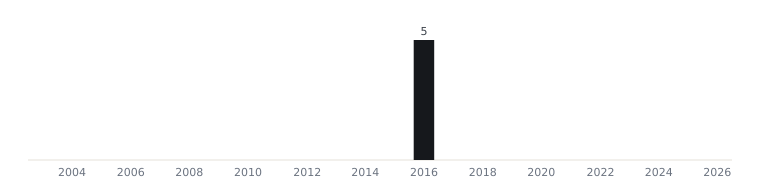
Wakefield Thermal Solutions, Inc. also files yearly injury logs with OSHA, summarized below.
New Hampshire · latest 90 days of OSHA records
52employers cited
Get notified the morning OSHA posts each new citation in New Hampshire: the employer, the site address, the rules broken and the penalty.
See who gets cited nextLatest cited in New Hampshire
Checking a subcontractor, a client or your own company? Watch Wakefield Thermal Solutions, Inc. and get notified the morning OSHA posts a new citation for it.
Watch this company120 Northwest Blvd, Nashua, NH 03063 · Analytical Laboratory Instrument Manufacturing · OSHA's record · Phone and website on Google Maps
No citations from this inspection.
33 Bridge St., Pelham, NH 03076 · Power Boiler and Heat Exchanger Manufacturing · OSHA's record · Phone and website on Google Maps
| Citation and rule | Type | Proposed | Current | Issued | Status |
|---|---|---|---|---|---|
| Citation 1, item 1a 29 CFR 1910.215(a)(2) · Grinders and abrasive wheels |
Serious | $8,017 | $4,810 | Sep 19, 2016 | Final |
| Citation 1, item 1b 29 CFR 1910.334(a)(2)(ii) · Using electrical equipment |
Serious | $8,017 | $0 | Sep 19, 2016 | Final |
| Citation 1, item 2a 29 CFR 1910.303(b)(2) · Electrical equipment, general requirements |
Other-than-serious | $8,017 | $0 | Sep 19, 2016 | Final |
| Citation 1, item 2b 29 CFR 1910.305(a)(2)(v)(c) · Electrical wiring methods |
Other-than-serious | $0 | $0 | Sep 19, 2016 | Final |
| Citation 2, item 1 29 CFR 1910.305(b)(1)(ii) · Electrical wiring methods |
Repeat | $320 | $320 | Sep 19, 2016 | Final |
33 Bridge St., Pelham, NH 03076 · OSHA's record · Phone and website on Google Maps
Incident on Aug 7, 2001: Employee's fingers amputated by extrusion line stretcher
On August 7, 2001, Employee #1 had his fingers caught within the jaws of an 1800 tail Extrusion Line stretcher and amputated. According to the Facilities Manage r and VP of Operations, the previous light curtain malfunctioned and contributed to the accident. The light curtain system was replaced prior to additional stre tching. The 1800 Extrusion Line was inadequately guarded for pinch points on the head and tail stretchers. Employees were exposed to pinch points as they placed the extrusion into the head and tail stretchers. Each stretcher had a light cur tain system on the operator side of the stretchers (the opposite site was not ac cessible). Both the Tail and Head stretcher operators placed the extrusion into their stretcher and then utilized a deadman control (button or joystick) to clos e the stretcher jaws on the extrusion. A light curtain was in place to prevent a ccess along the sides of the stretcher (however the tail stretcher light curtain malfunctioned and contributed to the accident). An additional problem was that there was no system in place to prevent access through the front of the stretche r. The operators were able to activate the deadman control to close the stretche r jaws and simultaneously reach over the side of the light curtain system into t he front of the stretcher thus creating a situation where the stretchers were in adequately guarded.
| Citation and rule | Type | Proposed | Current | Issued | Status |
|---|---|---|---|---|---|
| Citation 1, item 1 29 CFR 1910.219(c)(2)(i) · Belts, pulleys and power-transmission parts |
Serious | $2,250 | $1,125 | Dec 21, 2001 | Closed |
| Citation 2, item 1 29 CFR 1910.212(a)(1) · Machine guarding |
Unclassified | $49,500 | $39,000 | Dec 21, 2001 | Closed |
From the Form 300A summaries employers file with OSHA each year. Rate = recordable cases per 100 full-time workers.
In 2019, the Pelham site logged 5 recordable injuries or illnesses among about 193 workers: 2.5 per 100 full-time workers, against a median of 2.9 for its industry. Those cases cost 2 days away from work.
| Site and year | Workers | Cases | Days-away cases | Rate | Industry median |
|---|---|---|---|---|---|
| Ancra Group : Wakefield-Pelham Pelham · 2019 | 193 | 5 | 2 | 2.5 | 2.9 |
Current text from the Code of Federal Regulations. Some citations were issued under older wording.
29 CFR 1910.212(a)(1)
(a) Machine guarding—(1) Types of guarding. One or more methods of machine guarding shall be provided to protect the operator and other employees in the machine area from hazards such as those created by point of operation, ingoing nip points, rotating parts, flying chips and sparks. Examples of guarding methods are—barrier guards, two-hand tripping devices, electronic safety devices, etc.
29 CFR 1910.215(a)(2)
(2) Guard design. The safety guard shall cover the spindle end, nut, and flange projections. The safety guard shall be mounted so as to maintain proper alignment with the wheel, and the strength of the fastenings shall exceed the strength of the guard, except:
29 CFR 1910.219(c)(2)(i)
(2) Guarding horizontal shafting. (i) All exposed parts of horizontal shafting seven (7) feet or less from floor or working platform, excepting runways used exclusively for oiling, or running adjustments, shall be protected by a stationary casing enclosing shafting completely or by a trough enclosing sides and top or sides and bottom of shafting as location requires.
Alert subscribers get notified of each newly cited employer in New Hampshire the morning it is posted. See the alert plans.
Source: U.S. Department of Labor, OSHA enforcement data. A citation is OSHA's allegation; employers can contest it, and the status column shows where each item stands. Something wrong on this page? Tell us.