Since 2001, OSHA inspectors have visited Adm Milling Co. in North Carolina 4 times.
The most recent inspection opened on Mar 12, 2024 on a referral, in Charlotte and is still open.
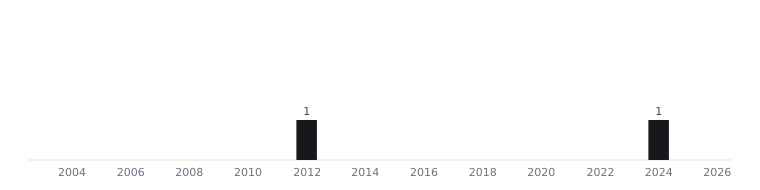
In all, OSHA issued 5 citation items: 2 serious and 3 other-than-serious.
The proposed penalties came to $19,512; today they stand at $15,162, 22% less.
Among manufacturing employers, the typical cited inspection since 2015 ends with a $4,875 penalty. Adm Milling Co. averages $14,062 across 1 cited inspection.
Adm Milling Co. also files yearly injury logs with OSHA, summarized below.
Citation items per year, by inspection date.
North Carolina · latest 90 days of OSHA records
236employers cited
Get notified the morning OSHA posts each new citation in North Carolina: the employer, the site address, the rules broken and the penalty.
OSHA records show Adm Milling Co. at 19 sites in 7 states. Together they've had 77 inspections and $325,997 in current penalties.
We match records by employer name and industry, so these sites are likely the same company, not certainly. Franchises and subsidiaries can file under one name.
Included with any plan: the site-by-site record for all 19 sites, with repeat and willful violations and citations per year for the whole company. Already a subscriber? Sign in.
From the Form 300A summaries employers file with OSHA each year. Rate = recordable cases per 100 full-time workers.
In 2025, the Charlotte site logged 1 recordable injury or illness among about 49 workers: 1.6 per 100 full-time workers, against a median of 2.1 for its industry. Those cases cost 70 days away from work.
Site and year
Workers
Cases
Days-away cases
Rate
Industry median
Charlotte Flour Mill
Charlotte · 2025
49
1
1
1.6
2.1
Included with any plan: 9 more yearly logs from these sites, back to 2016, with each site's average rate over its latest three years. Already a subscriber? Sign in.
(a) Machine guarding—(1) Types of guarding. One or more methods of machine guarding shall be provided to protect the operator and other employees in the machine area from hazards such as those created by point of operation, ingoing nip points, rotating parts, flying chips and sparks. Examples of guarding methods are—barrier guards, two-hand tripping devices, electronic safety devices, etc.
29 CFR 1910.219 · Belts, pulleys and power-transmission parts
29 CFR 1910.219(e)(1)(i)
(e) Belt, rope, and chain drives—(1) Horizontal belts and ropes. (i) Where both runs of horizontal belts are seven (7) feet or less from the floor level, the guard shall extend to at least fifteen (15) inches above the belt or to a standard height except that where both runs of a horizontal belt are 42 inches or less from the floor, the belt shall be fully enclosed in accordance with paragraphs (m) and (o) of this section.
29 CFR 1910.23 · Guarding floor and wall openings and holes
29 CFR 1910.9 · Compliance duties owed to each employee
29 CFR 1910.9(b)
(b) Training. Standards in this part requiring training on hazards and related matters, such as standards requiring that employees receive training or that the employer train employees, provide training to employees, or institute or implement a training program, impose a separate compliance duty with respect to each employee covered by the requirement. The employer must train each affected employee in the manner required by the standard, and each failure to train an employee may be considered a separate violation.
Alert subscribers get notified of each newly cited employer in North Carolina the morning it is posted. See the alert plans.
Source: U.S. Department of Labor, OSHA enforcement data. A citation is OSHA's allegation; employers can contest it, and the status column shows where each item stands. Something wrong on this page? Tell us.