OSHA has inspected Devore Aviation Corp. 2 times in New Mexico since 1991.
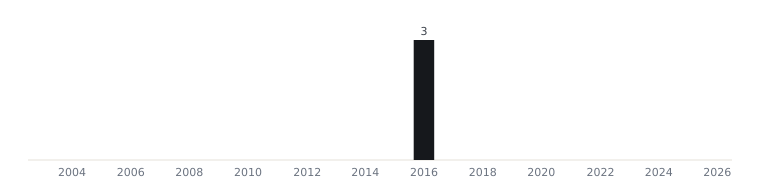
The latest one began on Oct 4, 2016 on a referral, in Albuquerque.
Those inspections ended with 6 citation items: 1 serious and 5 other-than-serious.
Penalties were first proposed at $875 and still stand at $875.
Lead in general industry comes up most often in these citations: 2 items under 1910.1025.
How that compares: the median penalty per cited inspection for manufacturing employers since 2015 is $3,600, and Devore Aviation Corp. averages $875 (1 cited inspection).
Devore Aviation Corp. also files yearly injury logs with OSHA, summarized below.
Citation items per year, by inspection date.
Want to know if OSHA cites Devore Aviation Corp. again? Add it to a watchlist and we will email you the morning the citation shows up.
From the Form 300A summaries employers file with OSHA each year. Rate = recordable cases per 100 full-time workers.
In 2020, the Albuquerque site logged 6 recordable injuries or illnesses among about 27 workers: 21.2 per 100 full-time workers, against a median of 2.7 for its industry. Those cases cost 24 days away from work.
Site and year
Workers
Cases
Days-away cases
Rate
Industry median
Devore Aviation
Albuquerque · 2020
27
6
6
21.2
2.7
The rules behind these citations
Current text from the Code of Federal Regulations. Some citations were issued under older wording.
29 CFR 1904.2 · Partial exemption for establishments in certain industries
(2) Initial determination. Each employer who has a workplace or work operation covered by this standard shall determine if any exployee may be exposed to lead at or above the action level.
29 CFR 1910.1025(e)(3)(i)
(3) Compliance program. (i) Each employer shall establish and implement a written compliance program to reduce exposures to or below the permissible exposure limit, and interim levels if applicable, solely by means of engineering and work practice controls in accordance with the implementation schedule in paragraph (e)(1).
(h) Employee information and training. (1) Employers shall provide employees with effective information and training on hazardous chemicals in their work area at the time of their initial assignment, and whenever a new chemical hazard the employees have not previously been trained about is introduced into their work area. Information and training may be designed to cover categories of hazards (e.g., flammability, carcinogenicity) or specific chemicals. Chemical-specific information must always be available through labels and safety data sheets.
Source: U.S. Department of Labor, OSHA enforcement data. A citation is OSHA's allegation; employers can contest it, and the status column shows where each item stands. Something wrong on this page? Tell us.