OSHA SearchOSHA records by employer

Sound Resource Solutions: OSHA inspections and violations

Shepherd, Texas · All Other Miscellaneous Chemical Product and Preparation Manufacturing · NAICS 325998

1inspections
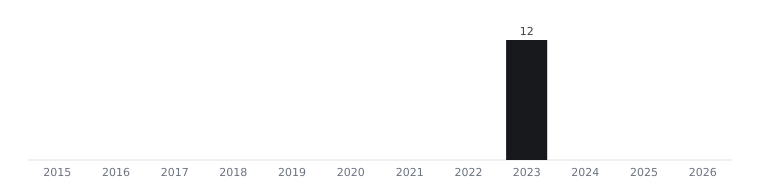
12citation items
$88,240current penalties
Nov 8, 2023last inspection

Sound Resource Solutions has one OSHA inspection on record in Texas.

OSHA opened it on Nov 8, 2023 on a referral, in Shepherd.

From that inspection OSHA issued 12 citation items: 8 serious and 4 other-than-serious.

OSHA proposed $90,336 in penalties. After settlements and reviews the total is $88,240, down 2%.

Most often, OSHA cited 1910.134, respiratory protection (3 items).

For context, across all manufacturing employers the median penalty per cited inspection since 2015 is $4,500. Sound Resource Solutions averages $88,240 over 1 cited inspection in that time.

It reported 1 severe injury to OSHA since 2015.

Sound Resource Solutions: OSHA citation items per year, 2023 to 2023
Citation items per year, by inspection date.

Want to know if OSHA cites Sound Resource Solutions again? Add it to a watchlist and we will email you the morning the citation shows up.

Watch this company

Inspection history

Inspection 347097974 OPENED NOV 8, 2023Closed

Referral · Complete · Safety · 39 employees at the site · Closed Sep 10, 2024

731 Farm To Market 1127, Shepherd, TX 77371 · All Other Miscellaneous Chemical Product and Preparation Manufacturing · OSHA's record · Phone and website on Google Maps

Citation and ruleTypeProposedCurrentIssuedStatus
Citation 1, item 1
29 CFR 1910.28(b)(1)(i) · Fall protection in general industry
Other-than-serious$11,292$11,292May 2, 2024Final
Citation 1, item 3
29 CFR 1910.38(d) · Emergency action plans
Serious$11,292$8,469May 2, 2024Final
Citation 1, item 4
29 CFR 1910.106(f)(3)(i) · Flammable liquids
Serious$11,292$8,469May 2, 2024Final
Citation 1, item 5
29 CFR 1910.106(f)(8) · Flammable liquids
Other-than-serious$11,292$8,469May 2, 2024Final
Citation 1, item 6
29 CFR 1910.119(e)(1) · Process safety management
Serious$11,292$8,469May 2, 2024Final
Citation 1, item 7b
29 CFR 1910.119(j)(4)(iv) · Process safety management
Serious$0$8,067May 2, 2024Final
Citation 1, item 8a
29 CFR 1910.132(d)(1)(i) · Personal protective equipment, general requirements
Other-than-serious$11,292$11,292May 2, 2024Final
Citation 1, item 9a
29 CFR 1910.134(c)(1) · Respiratory protection
Serious$11,292$8,469May 2, 2024Final
Citation 1, item 9b
29 CFR 1910.134(e)(1) · Respiratory protection
Serious$0$0May 2, 2024Final
Citation 1, item 9c
29 CFR 1910.134(f)(2) · Respiratory protection
Serious$0$0May 2, 2024Final
Citation 1, item 10b
29 CFR 1910.178(l)(6) · Forklifts and other powered industrial trucks
Serious$0$8,469May 2, 2024Final
Citation 1, item 11
29 CFR 1910.1200(h)(1) · Hazard communication
Other-than-serious$11,292$6,775May 2, 2024Final

Severe injury reports

Employers must report any work-related amputation, in-patient hospitalization or loss of an eye to OSHA within 24 hours. 1 report on file.

Nov 8, 2023, Shepherd: Hospitalization · chemical burns and corrosions, unspecified · nonclassifiable

An employee was moving two totes of turpentine. Noticing that one of them was leaking, he stopped his forklift and began to look for the leak. The forklift caught fire, and the employee suffered severe burns. He was hospitalized.

The rules behind these citations

Current text from the Code of Federal Regulations. Some citations were issued under older wording.

29 CFR 1910.106 · Flammable liquids

29 CFR 1910.106(f)(3)(i)

(3) Loading and unloading facilities— (i) Separation. Tank vehicle and tank car loading or unloading facilities shall be separated from aboveground tanks, warehouses, other plant buildings or nearest line of adjoining property that may be built upon by a distance of 25 feet for Category 1 or 2 flammable liquids, or Category 3 flammable liquids with a flashpoint below 100 °F (37.8 °C), and 15 feet for Category 3 flammable liquids with a flashpoint at or above 100 °F (37.8 °C) and Category 4 flammable liquids measured from the nearest position of any fill spout. Buildings for pumps or shelters for personnel may be a part of the facility.

29 CFR 1910.106(f)(8)

(8) Fire control. Suitable fire-control devices, such as small hose or portable fire extinguishers, shall be available to locations where fires are likely to occur. Additional fire-control equipment may be required where a tank of more than 50,000 gallons individual capacity contains Category 1 or 2 flammable liquids, or Category 3 flammable liquids with a flashpoint below 100 °F (37.8 °C), and where an unusual exposure hazard exists from surrounding property. Such additional fire-control equipment shall be sufficient to extinguish a fire in the largest tank. The design and amount of such equipment shall be in accordance with approved engineering standards.

29 CFR 1910.119 · Process safety management

29 CFR 1910.119(e)(1)

(e) Process hazard analysis. (1) The employer shall perform an initial process hazard analysis (hazard evaluation) on processes covered by this standard. The process hazard analysis shall be appropriate to the complexity of the process and shall identify, evaluate, and control the hazards involved in the process. Employers shall determine and document the priority order for conducting process hazard analyses based on a rationale which includes such considerations as extent of the process hazards, number of potentially affected employees, age of the process, and operating history of the process. The process hazard analysis shall be conducted as soon as possible, but not later than the following schedule:

29 CFR 1910.1200 · Hazard communication

29 CFR 1910.132 · Personal protective equipment, general requirements

29 CFR 1910.134 · Respiratory protection

29 CFR 1910.178 · Forklifts and other powered industrial trucks

29 CFR 1910.28 · Fall protection in general industry

29 CFR 1910.38 · Emergency action plans

Other all other miscellaneous chemical product and preparation manufacturing employers in Texas

Source: U.S. Department of Labor, OSHA enforcement data. A citation is OSHA's allegation; employers can contest it, and the status column shows where each item stands. Something wrong on this page? Tell us.