Middletown, New York · Polystyrene Foam Product Manufacturing · NAICS 326140
22inspections
81citation items
$105,922current penalties
Oct 14, 2021last inspection
OSHA has inspected Genpak, LLC 22 times in New York since 1983.
The latest one began on Oct 14, 2021 on a referral, in Middletown.
Those inspections ended with 81 citation items: 59 serious and 22 other-than-serious.
Penalties were first proposed at $148,902 and now stand at $105,922, 29% lower after settlements or reviews.
Process safety management comes up most often in these citations: 11 items under 1910.119.
How that compares: the median penalty per cited inspection for manufacturing employers since 2015 is $4,500, and Genpak, LLC averages $10,104 (2 cited inspections).
1 inspection on this page followed a fatal incident.
Genpak, LLC also files yearly injury logs with OSHA, summarized below.
It reported 3 severe injuries to OSHA since 2015.
The Wage and Hour Division has 1 case on it since 2015, with $14,844 in back wages owed to workers.
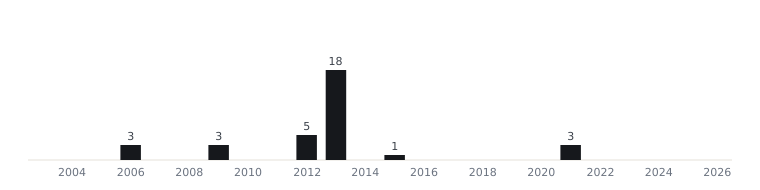
Citation items per year, by inspection date.
Want to know if OSHA cites Genpak, LLC again? Add it to a watchlist and we will email you the morning the citation shows up.
Incident on Oct 6, 2021: Employee amputates finger while cleaning thermoform printer
At approximately 3:45 a.m. on October 6, 2021, an employee performed maintenance on the thermoset printer. The employee's hand was caught in the roller nip. The employee amputated a finger and was hospitalized to treat these injuries.
Incident on Aug 31, 2000 (fatal): Employee killed when caught between calendar rollers
Employee #1, age 20, was operating the calendar, or S-wrap section, of an extrus ion machine manufactured by the Battenfeld Gloucester Engineering Company, Inc. This machine transformed polystyrene pellets into sheets of styrofoam packing ma terial used by food stores for meat and fish packing and by restaurants for take -out food containers. The supervisor, who was on the other side of the S-wrap ca lendar, had just handed Employee #1 a sheet of styrofoam to feed it into the win der section of the machine directly behind him. Somehow in the process, his tors o became caught in the 6 1/4 in. nip point between the two lowest rollers. As he was pulled in, he apparently managed to pull the trip wire to stop the rollers, but this dropped the 312 lb upper roller down 2 1/4 in., reducing the nip point to 4 in., and further crushing his torso. This caused the most serious damage t o his abdomen and internal organs. When the supervisor walked around the calenda r to verify that the feeding and winding had been done correctly, he found Emplo yee #1's body half-way in the nip point. It took maintenance workers approximate ly 45 minutes to torch-cut one of the rollers and extricate Employee #1 from the nip point. He was transported to the hospital, where he underwent surgery. Empl oyee #1 died several hours later.
From the Form 300A summaries employers file with OSHA each year. Rate = recordable cases per 100 full-time workers.
In 2024, the Middletown site logged 3 recordable injuries or illnesses among about 136 workers: 4.1 per 100 full-time workers, against a median of 2.6 for its industry. Those cases cost 7 days away from work.
Site and year
Workers
Cases
Days-away cases
Rate
Industry median
Genpak Middletown
Middletown · 2024
136
3
1
4.1
2.6
Middletown site
Middletown · 2023
136
2
2
1.7
2.6
Severe injury reports
Employers must report any work-related amputation, in-patient hospitalization or loss of an eye to OSHA within 24 hours. 3 reports on file.
An employee was moving a mold cart into a thermoformer for a different product. The employee was pushing the cart from the side when the cart rolled and caught the employee's fingertip between the thermoformer framing and the cart, amputating the right index fingertip (full nail removed).
(3) Floors. The floor surface of a spray booth and operator's working area, if combustible, shall be covered with noncombustible material of such character as to facilitate the safe cleaning and removal of residues.
29 CFR 1910.107(b)(5)(i)
(i) The spraying operations except electrostatic spraying operations shall be so designed, installed and maintained that the average air velocity over the open face of the booth (or booth cross section during spraying operations) shall be not less than 100 linear feet per minute. Electrostatic spraying operations may be conducted with an air velocity over the open face of the booth of not less than 60 linear feet per minute, or more, depending on the volume of the finishing material being applied and its flammability and explosion characteristics. Visible gauges or audible alarm or pressure activated devices shall be installed to indicate or insure that the required air velocity is maintained. Filter rolls shall be inspected to insure proper replacement of filter media.
29 CFR 1910.107(e)(4)
(4) Transferring liquids. Except as provided in paragraph (e)(5) of this section the withdrawal of flammable liquids and liquids with a flashpoint greater than 199.4 °F (93 °C) from containers having a capacity of greater than 60 gallons shall be by approved pumps. The withdrawal of flammable liquids or liquids with a flashpoint greater than 199.4 °F (93 °C) from containers and the filling of containers, including portable mixing tanks, shall be done only in a suitable mixing room or in a spraying area when the ventilating system is in operation. Adequate precautions shall be taken to protect against liquid spillage and sources of ignition.
Source: U.S. Department of Labor, OSHA enforcement data. A citation is OSHA's allegation; employers can contest it, and the status column shows where each item stands. Something wrong on this page? Tell us.